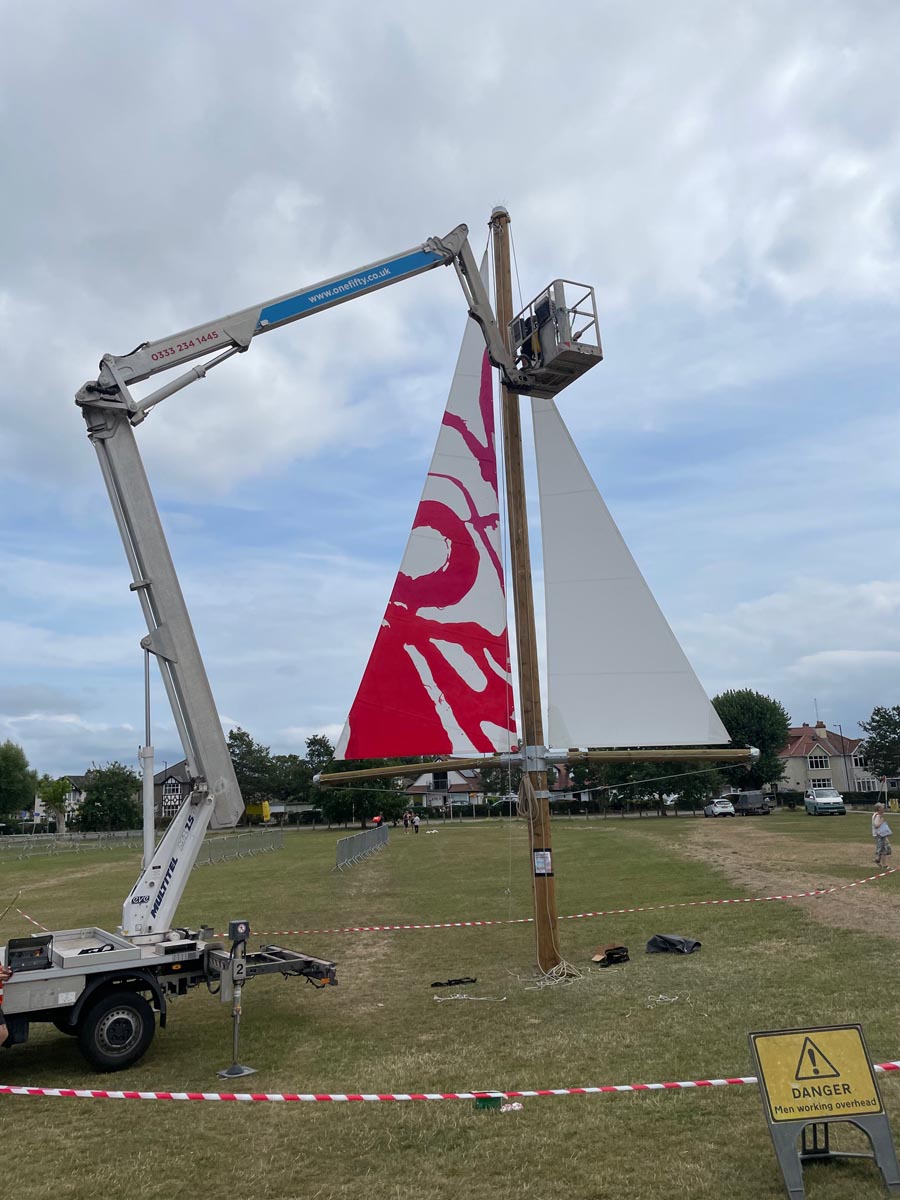
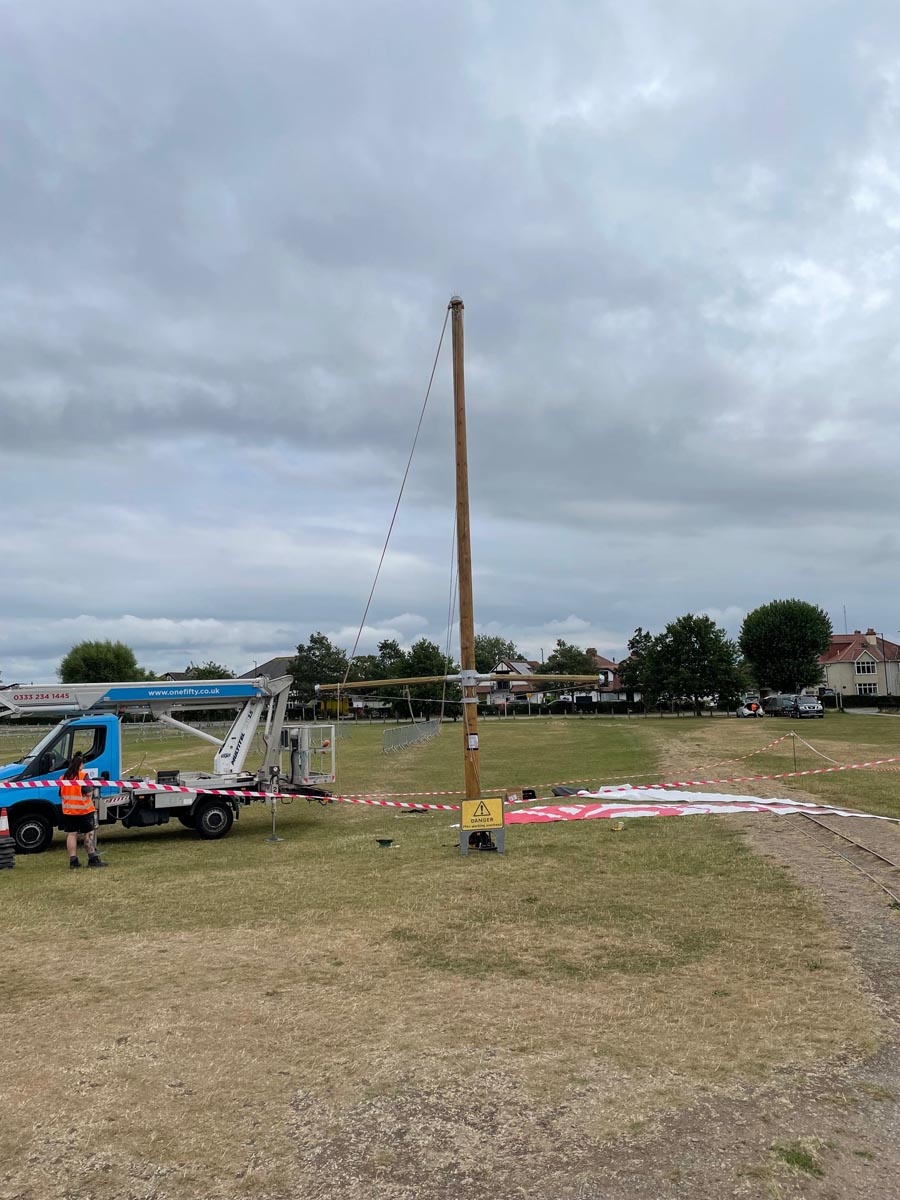
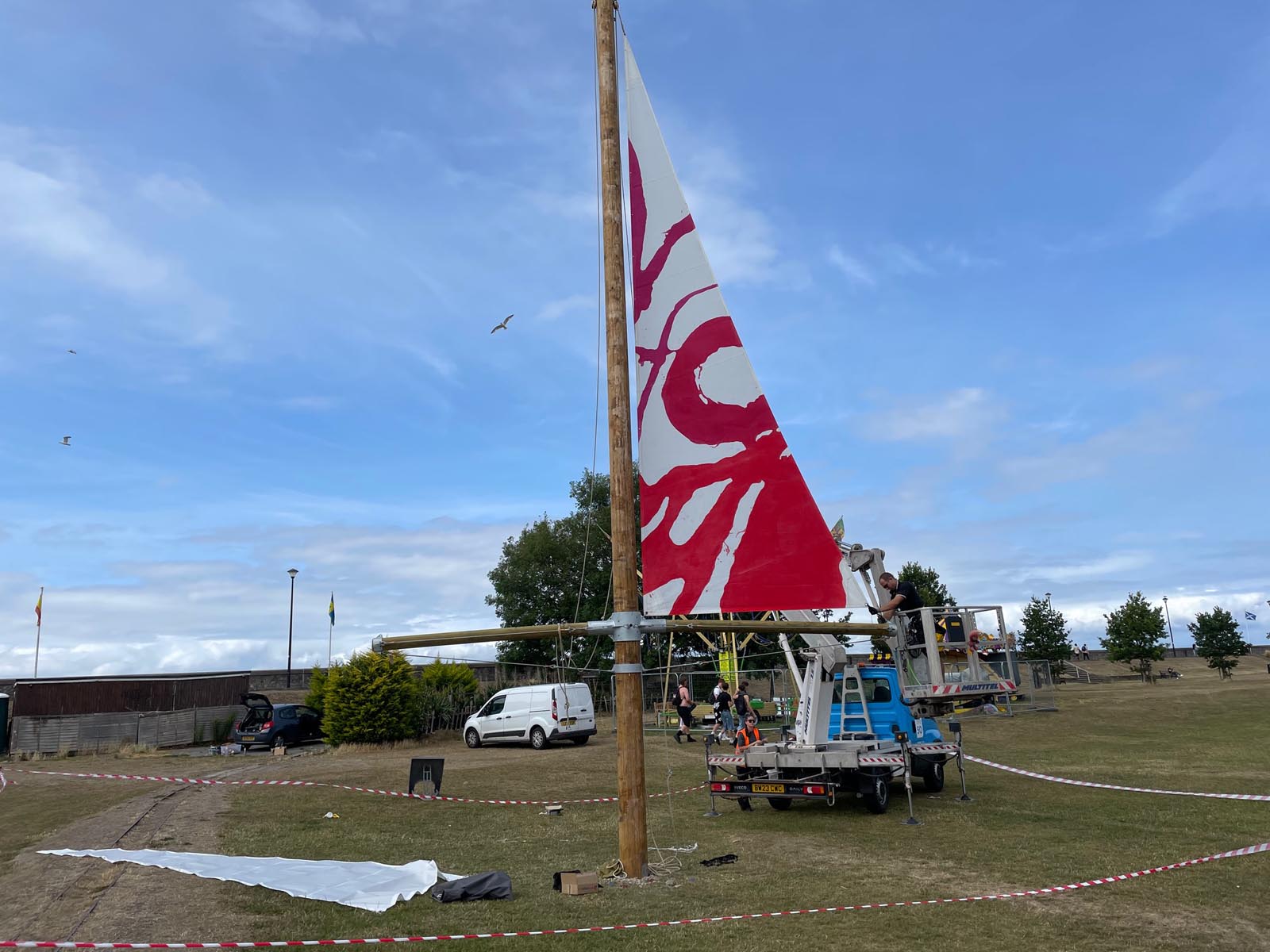
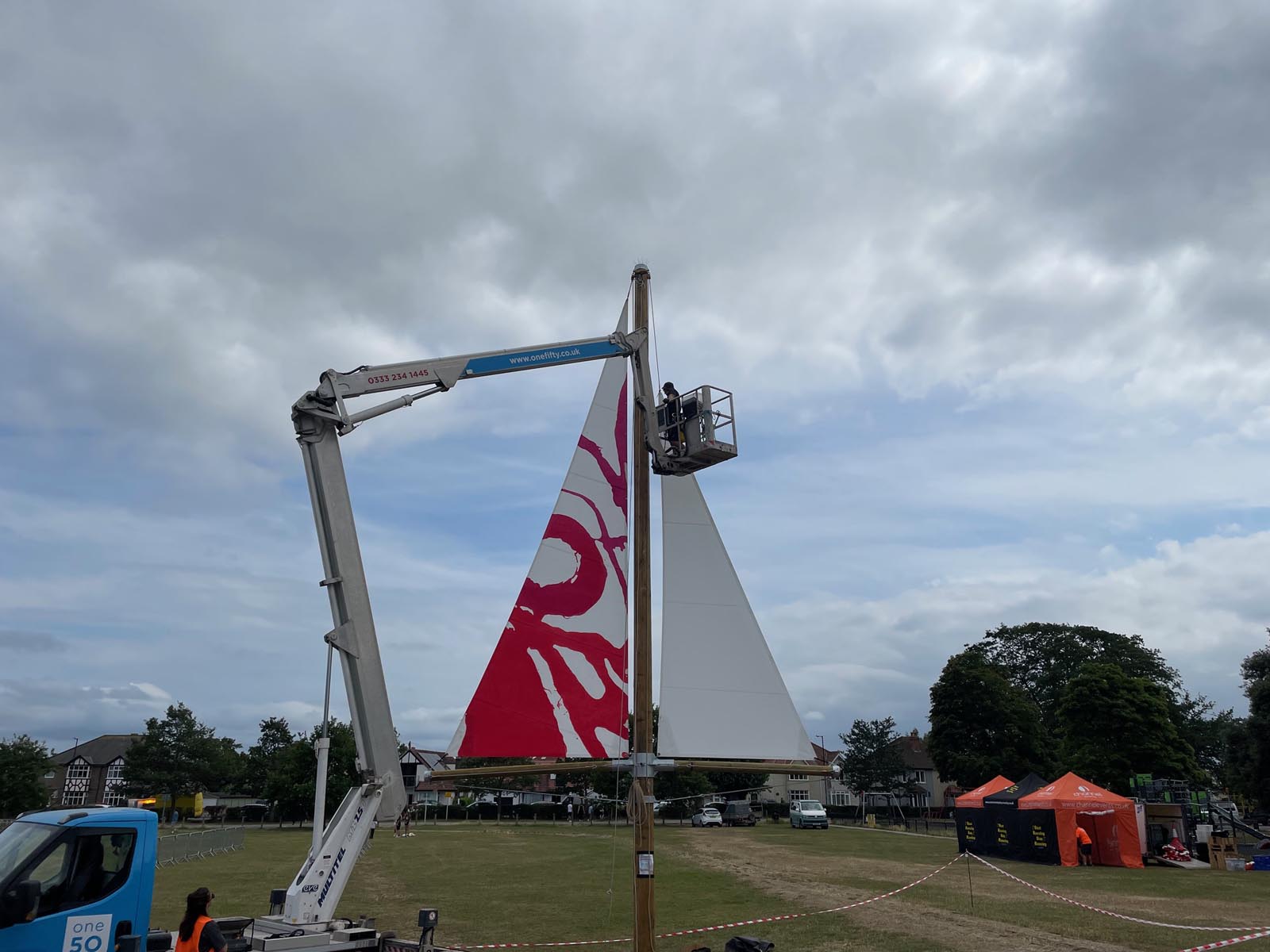
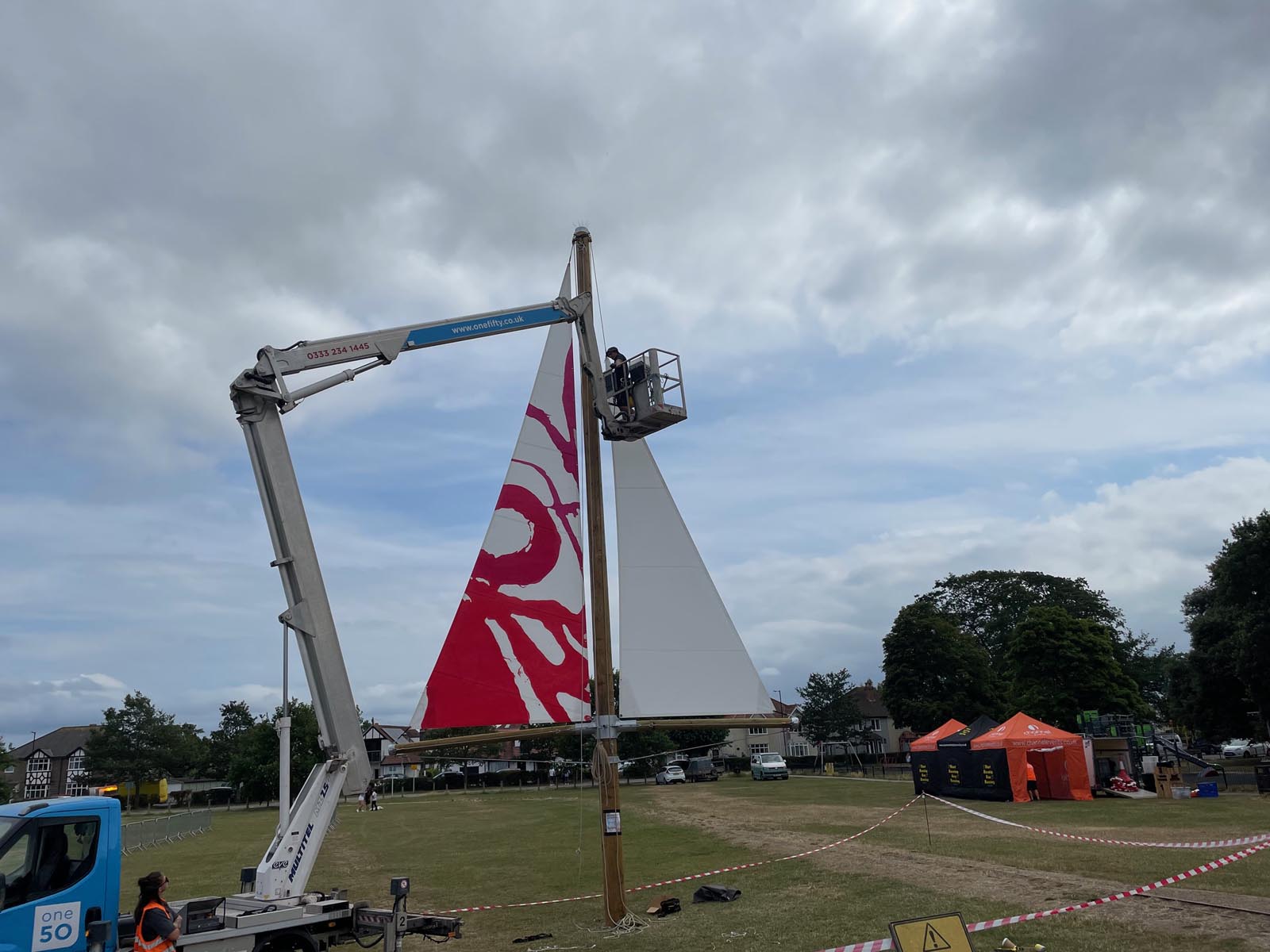
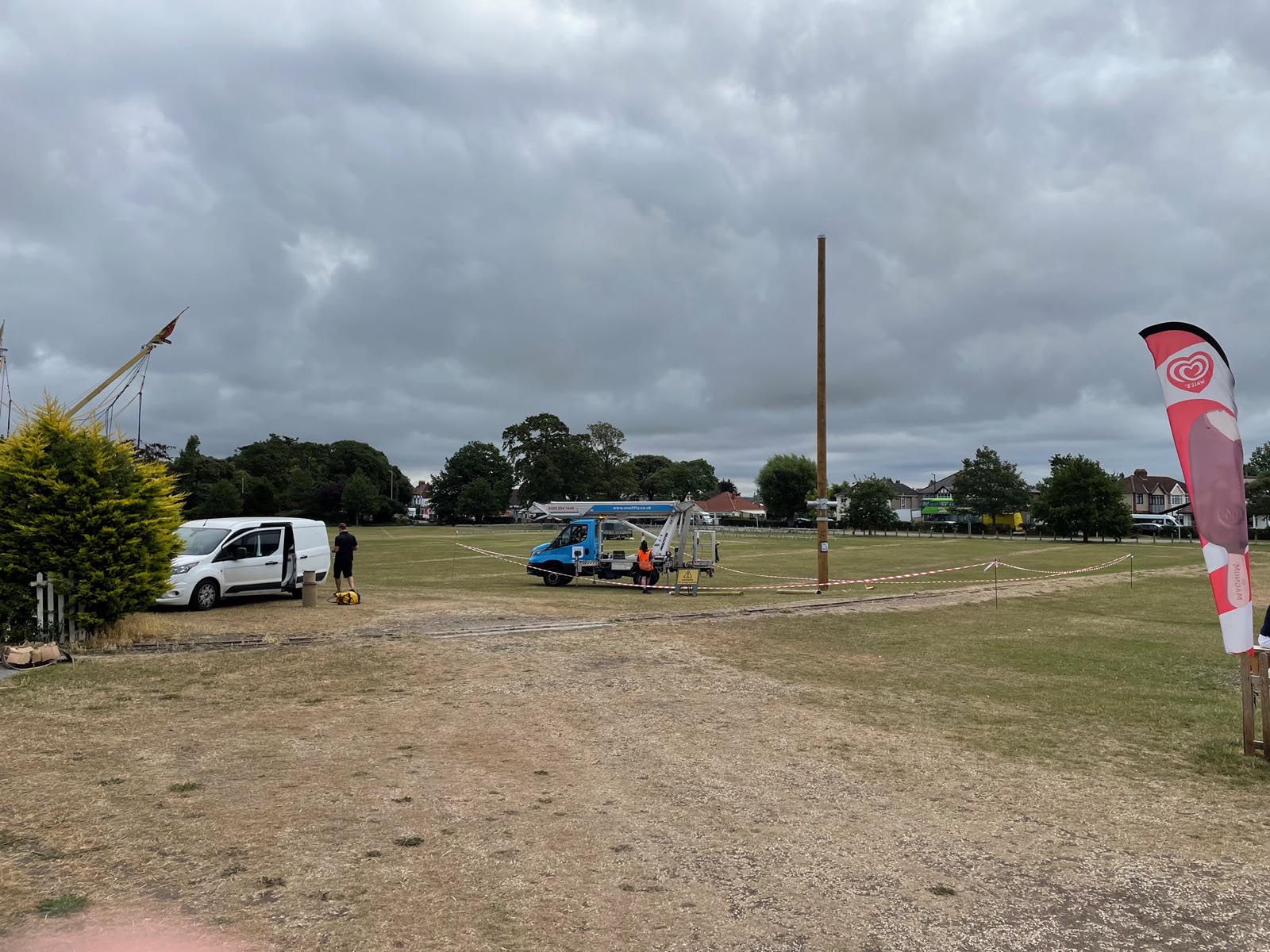
A clear part cloudy day with light winds was the perfect conditions to attach the timber booms to the mast, install the rigging and raise the sails for the first time!
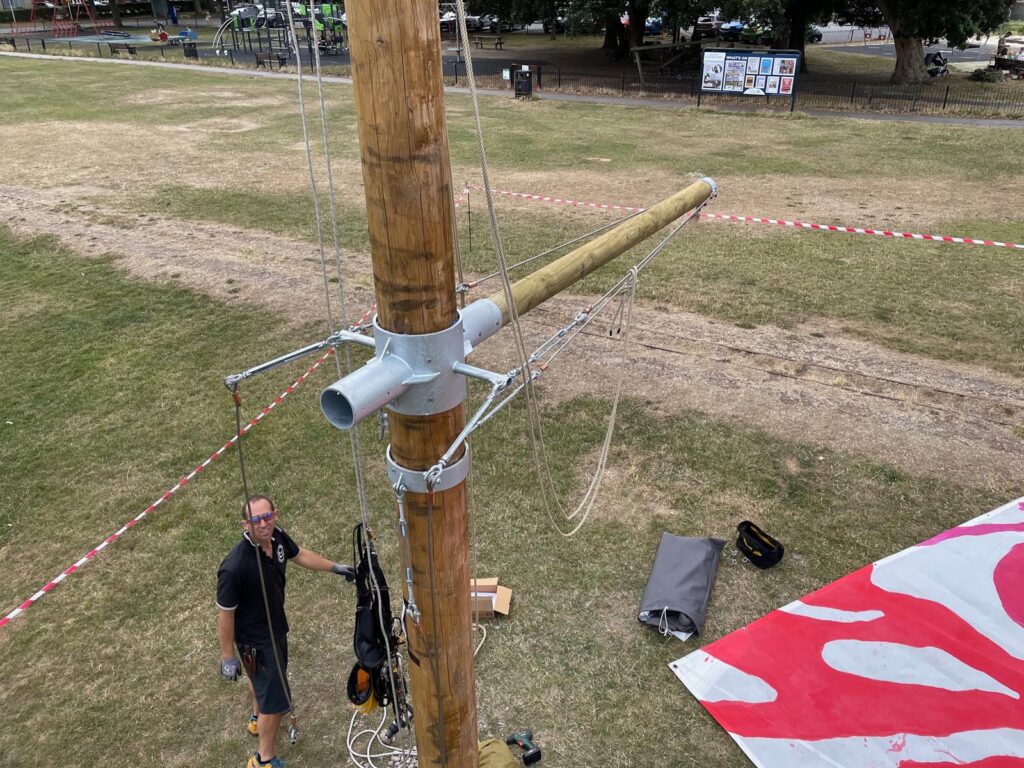
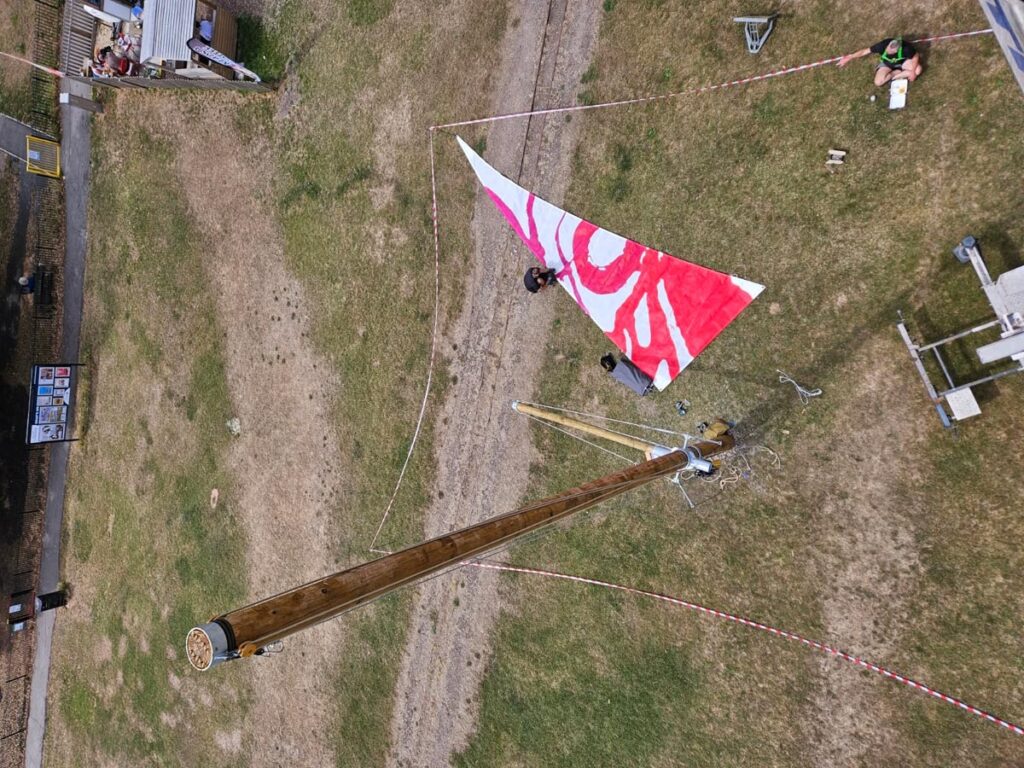
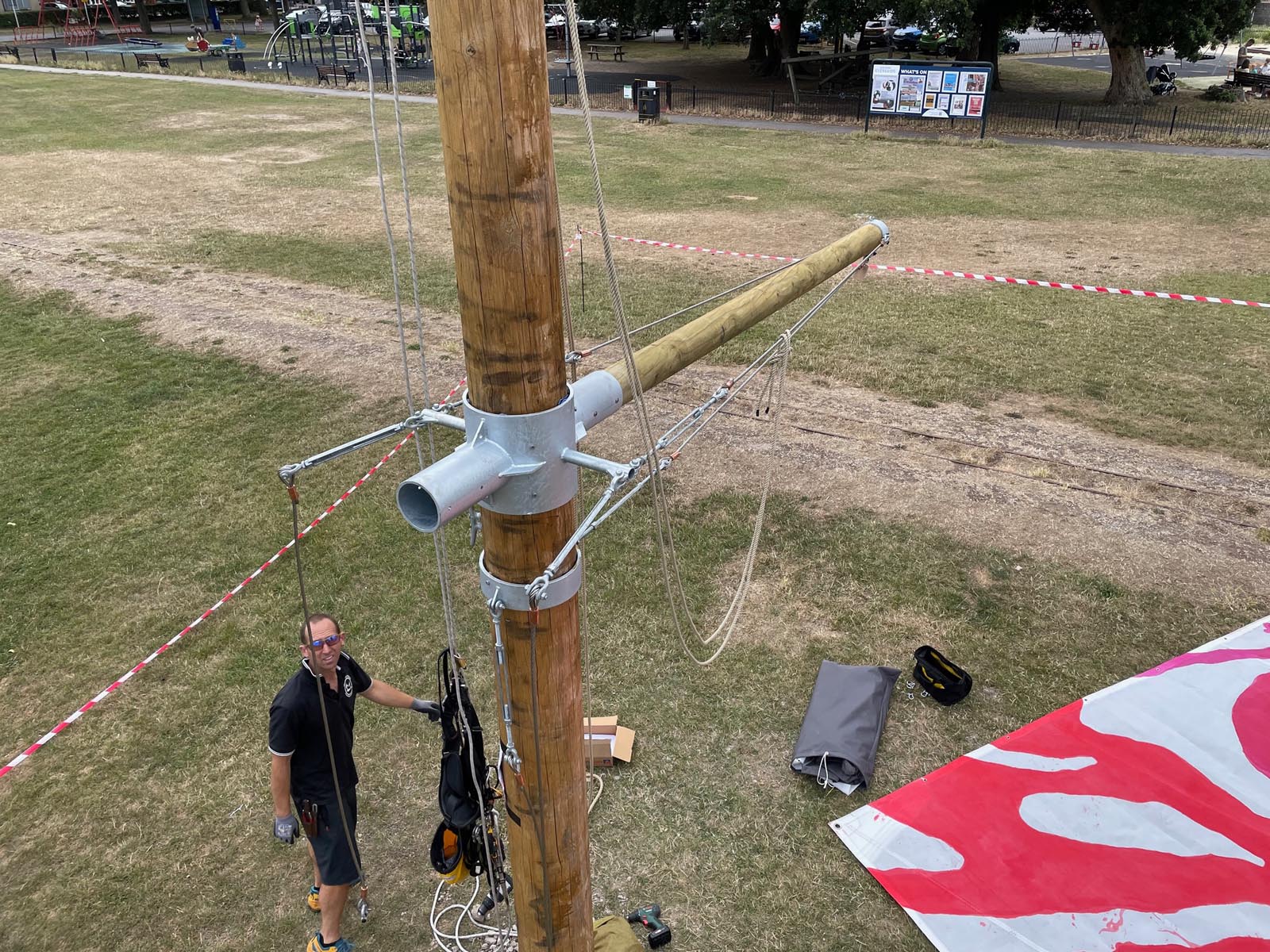
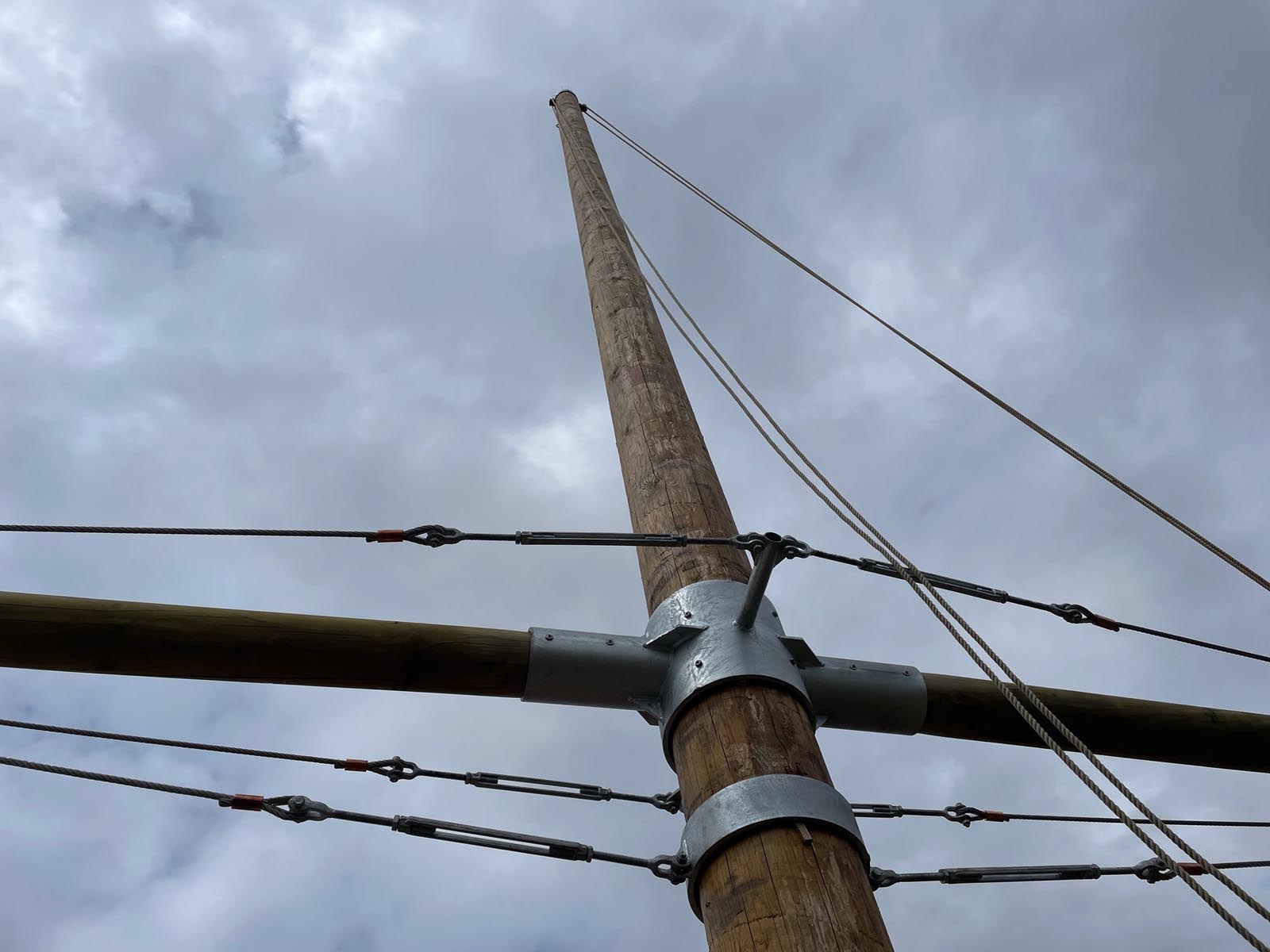
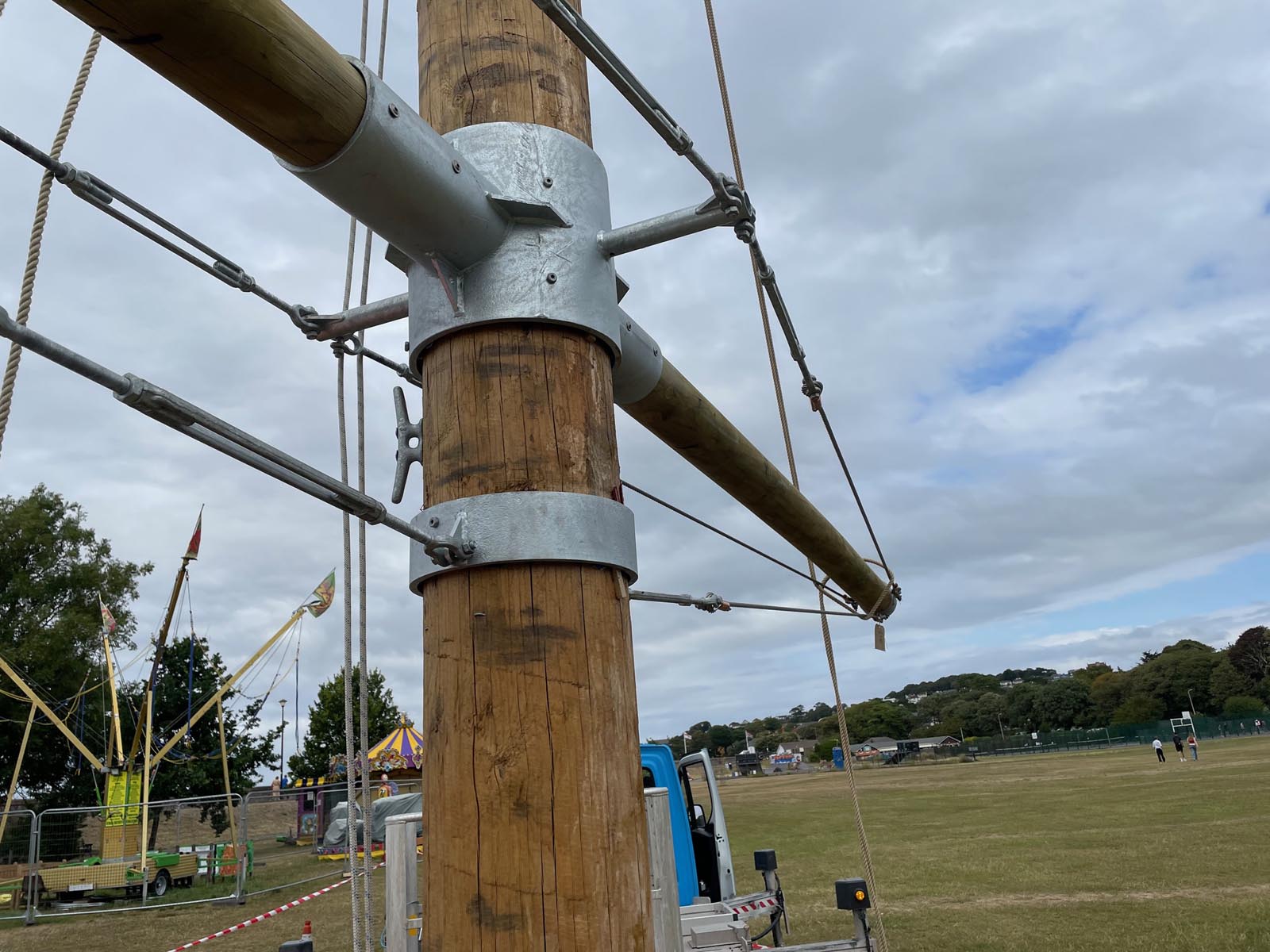
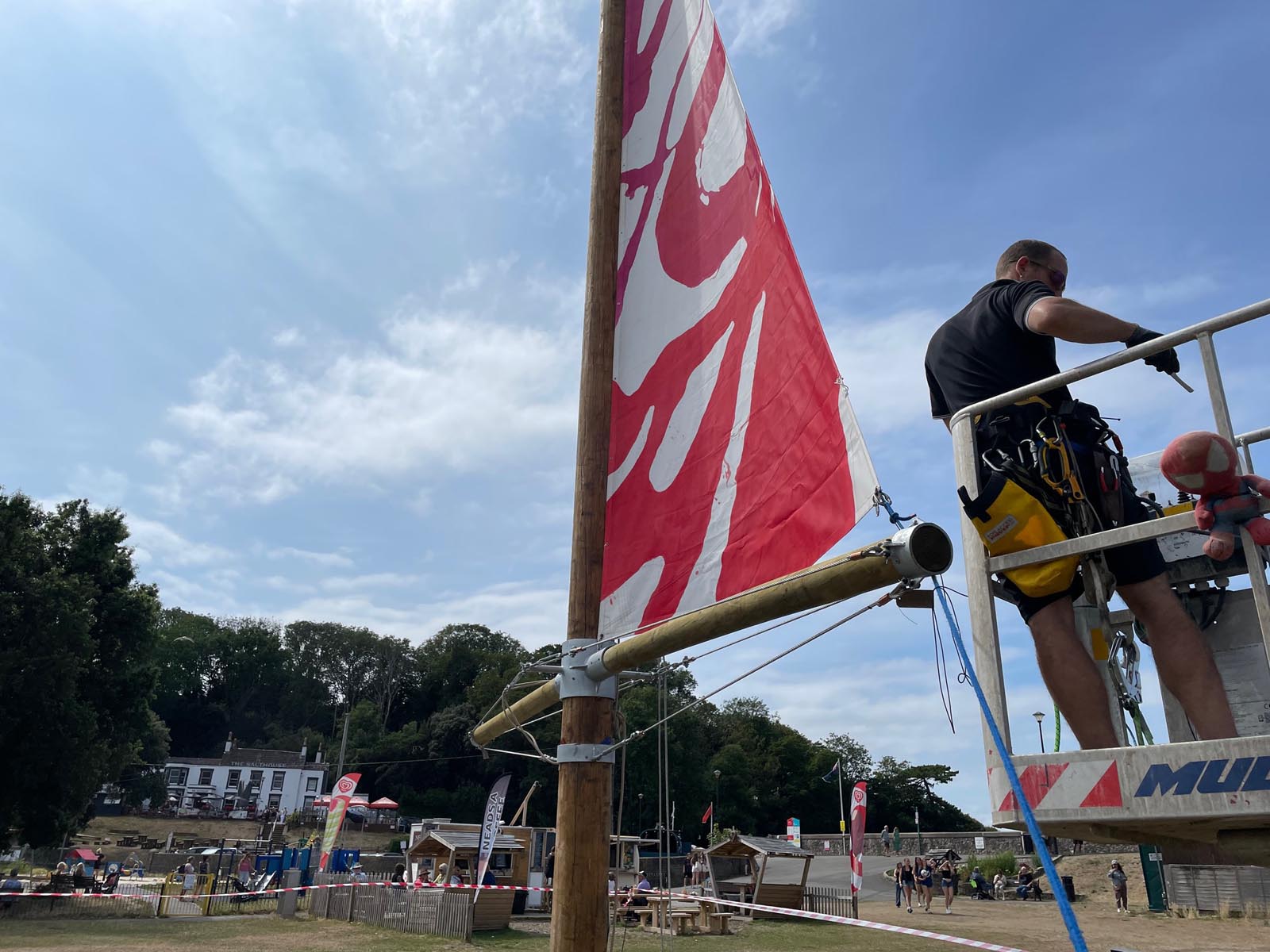
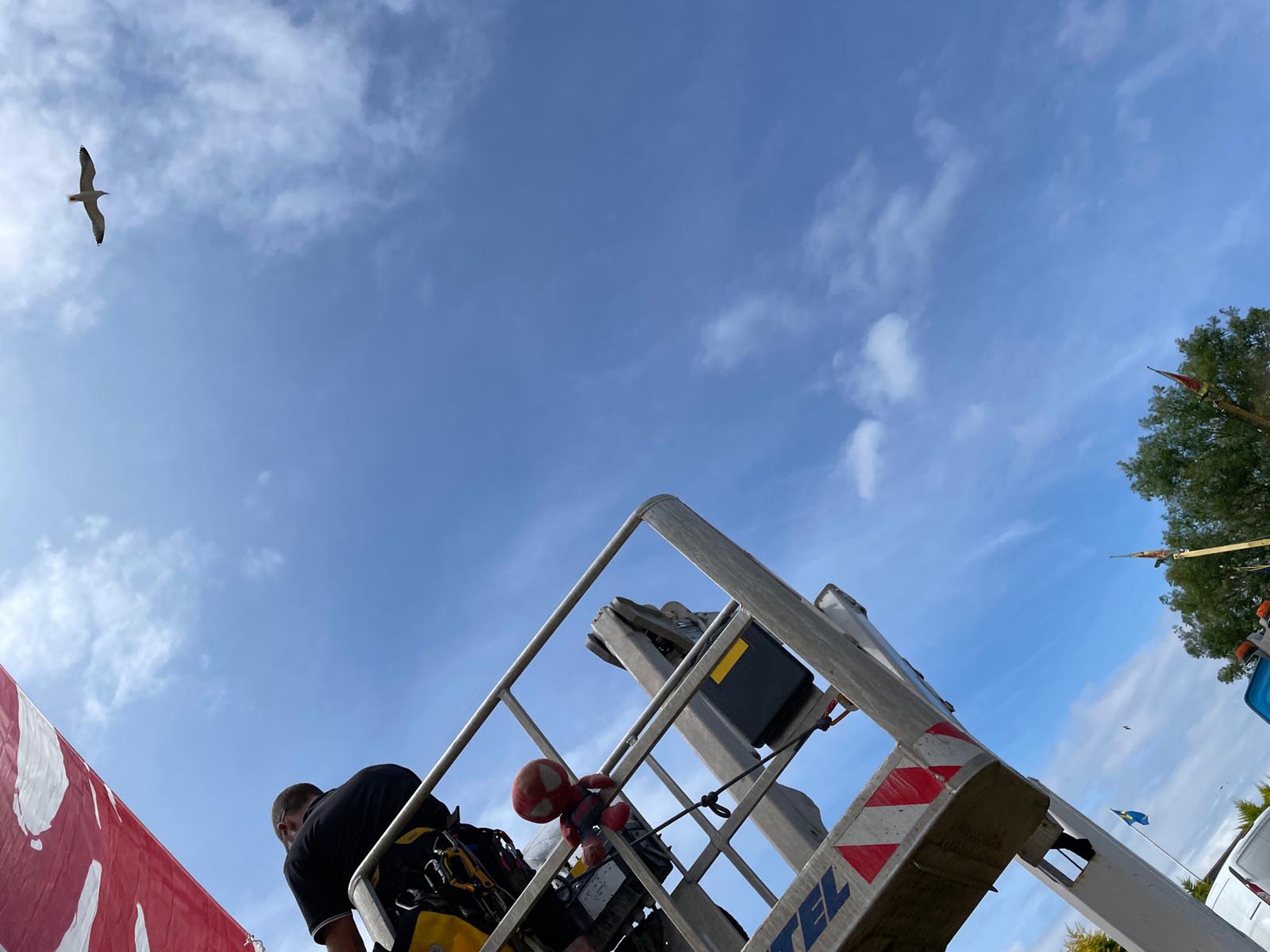
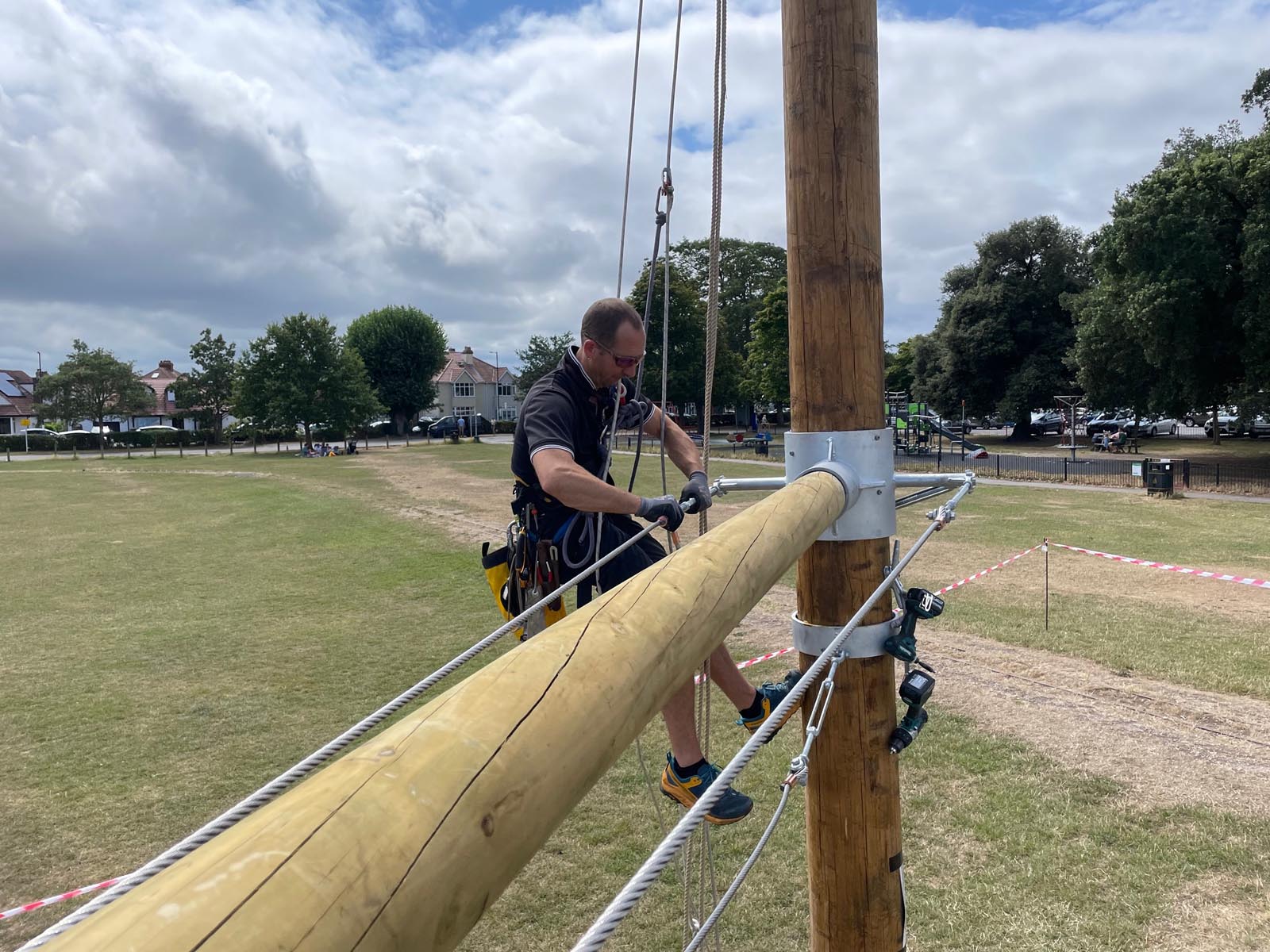
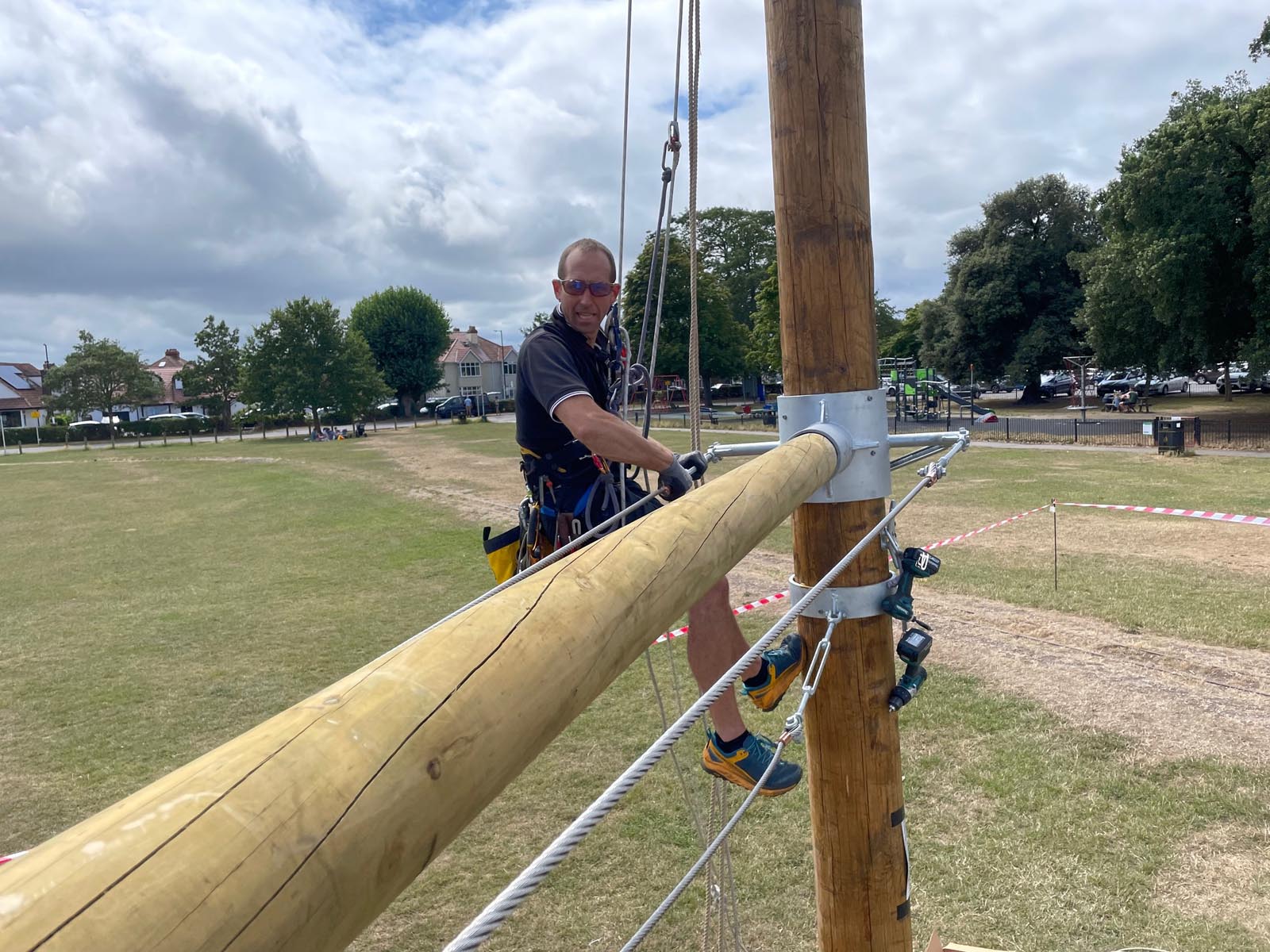
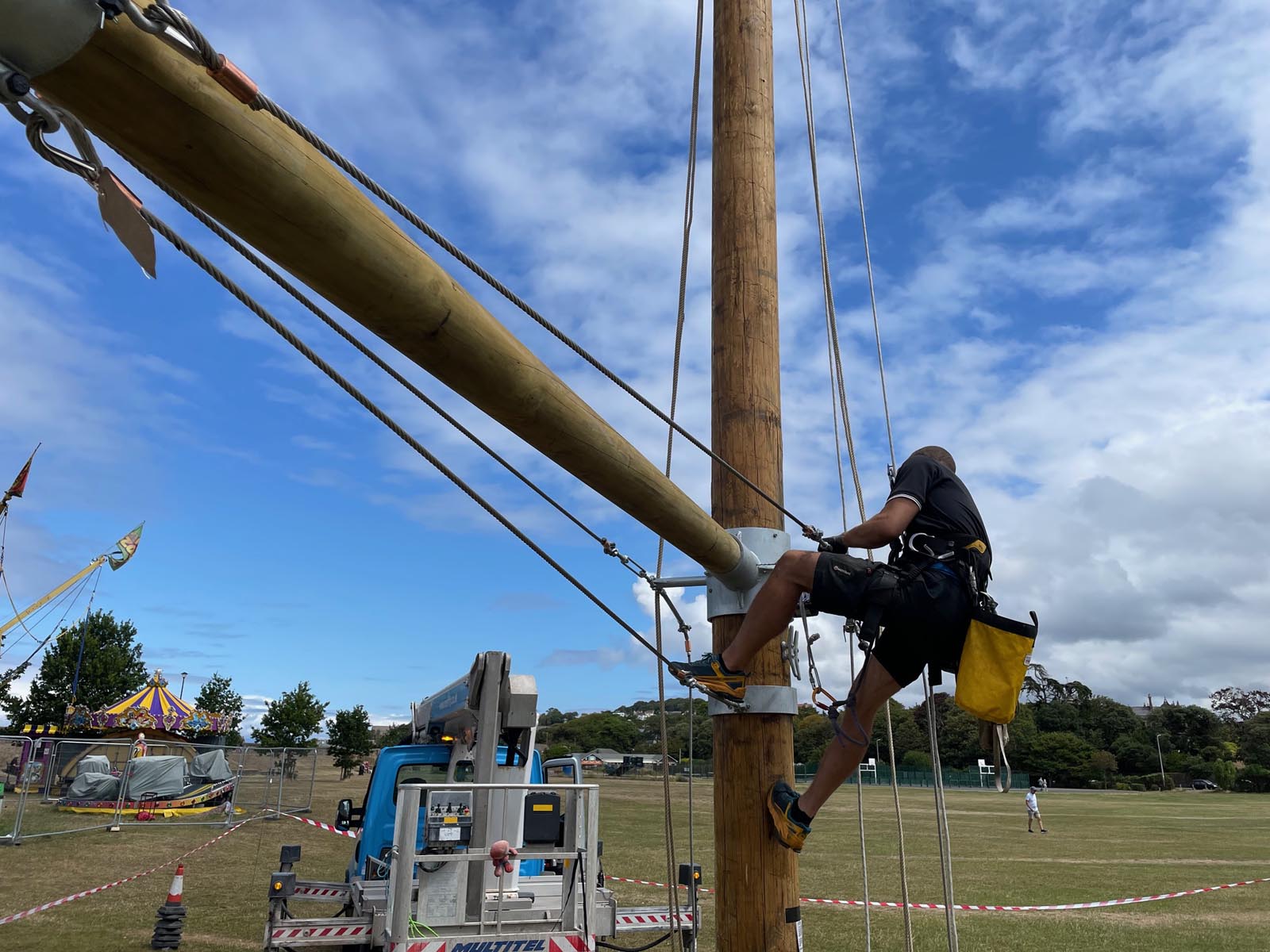
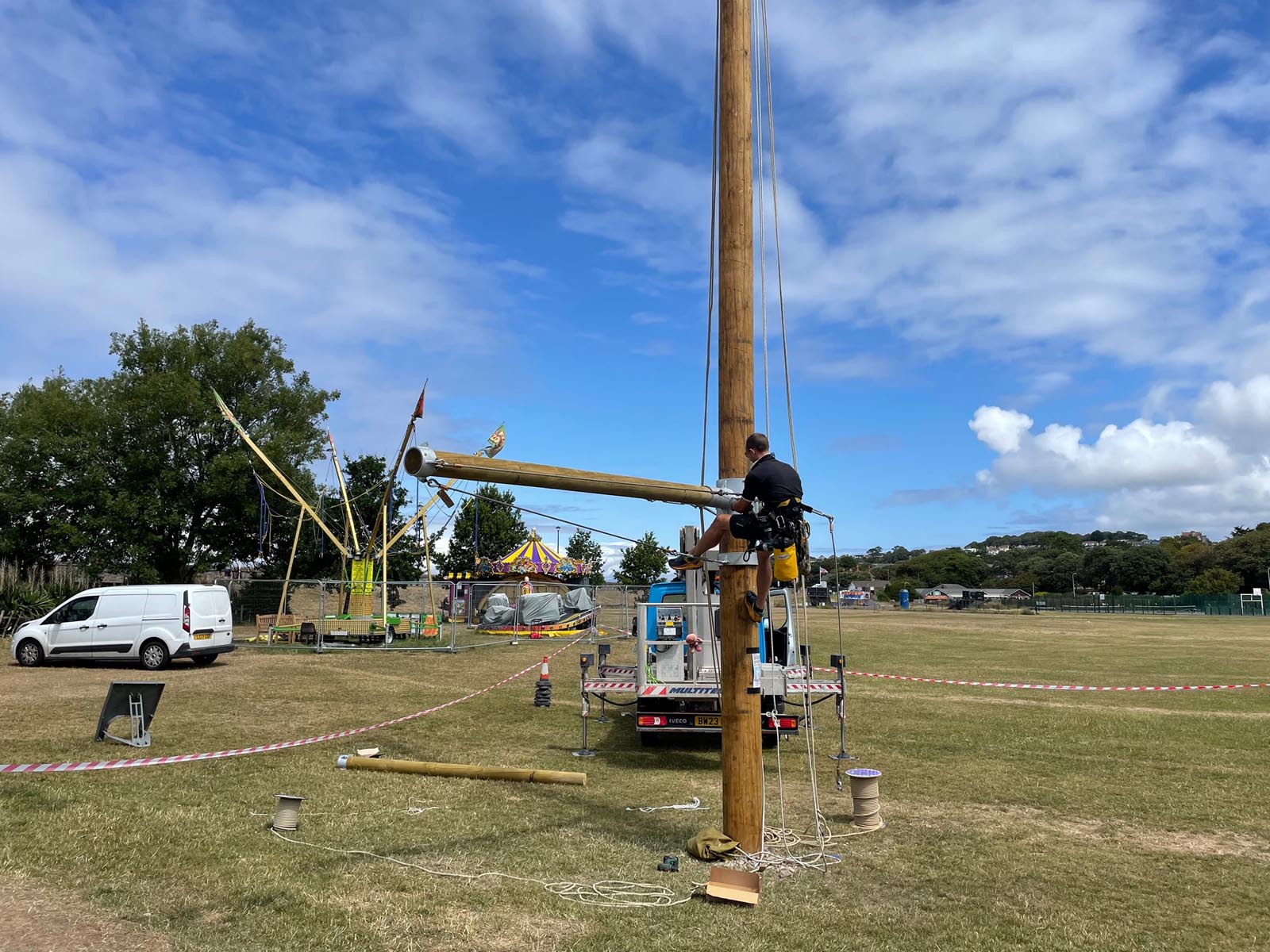
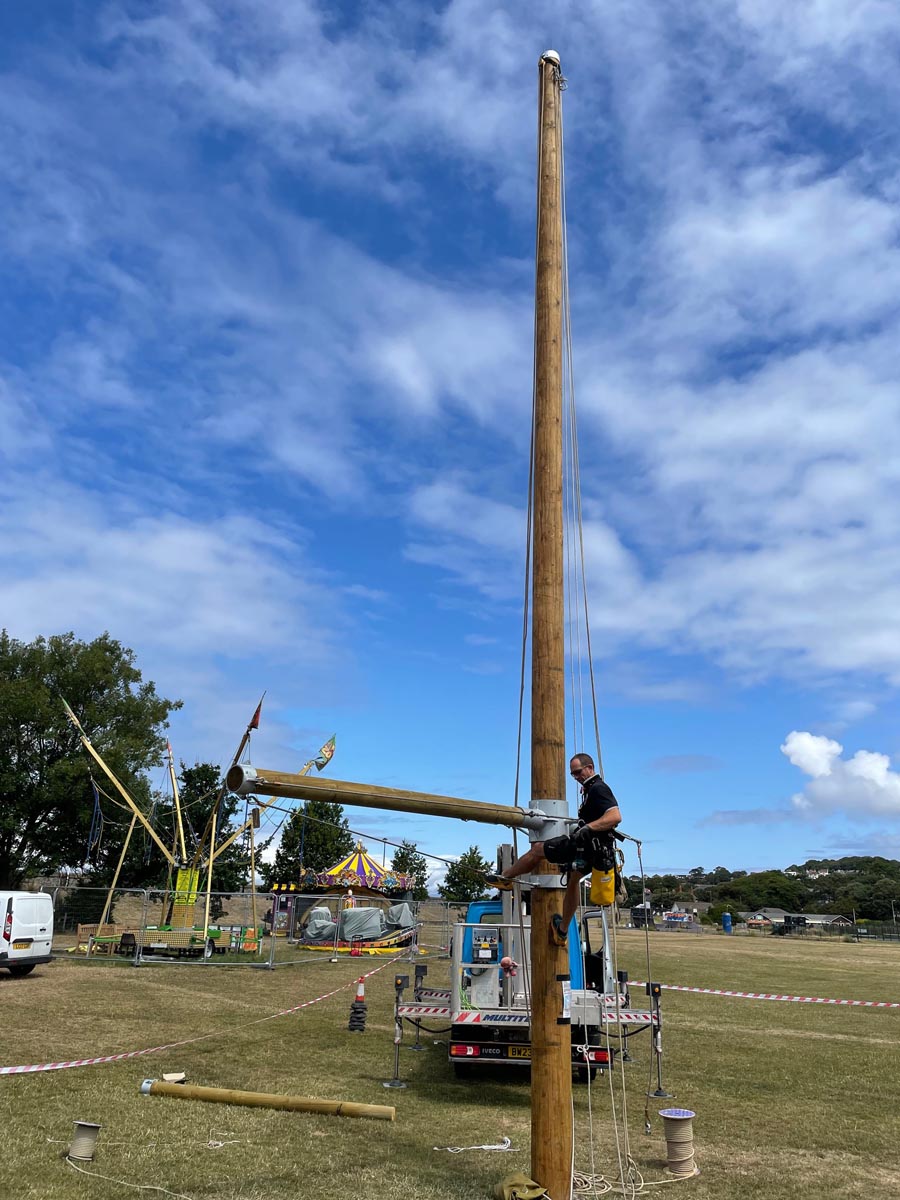
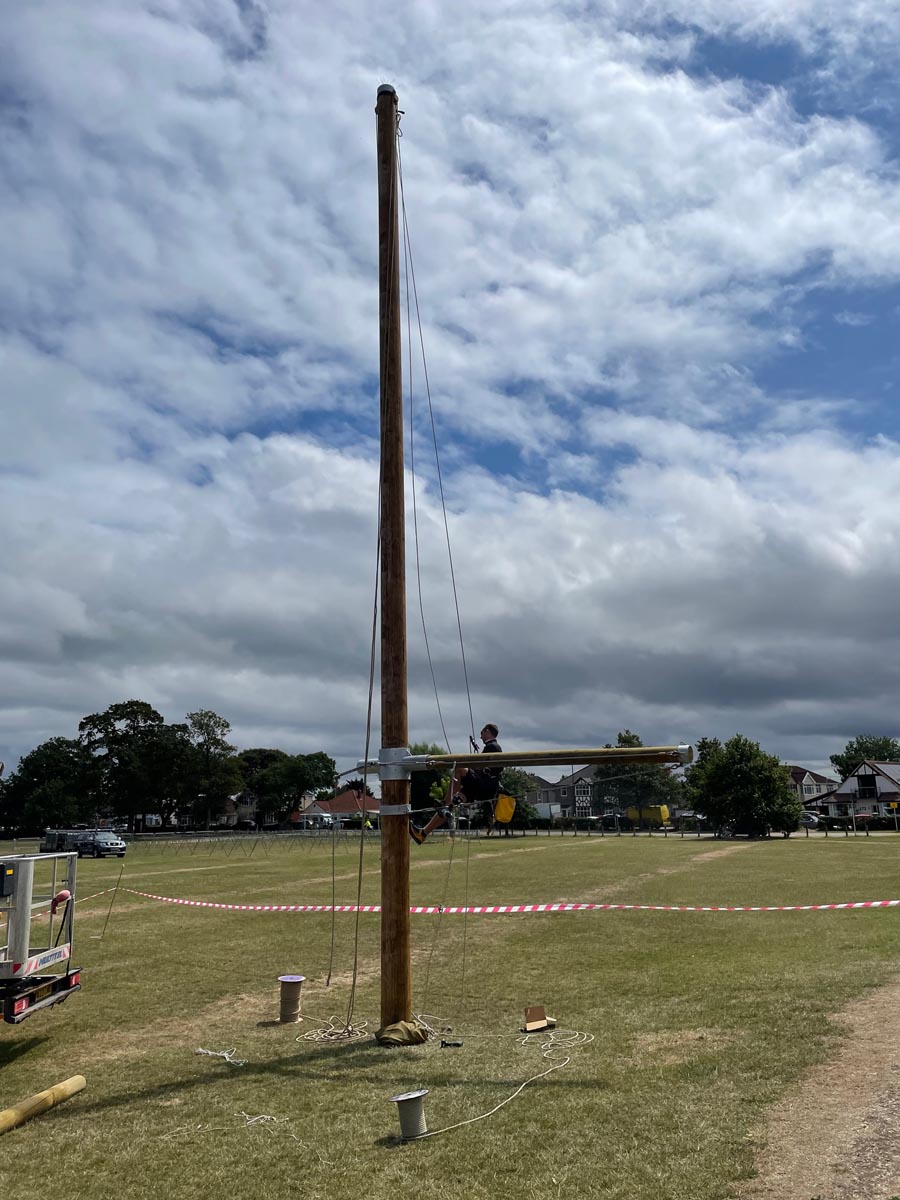
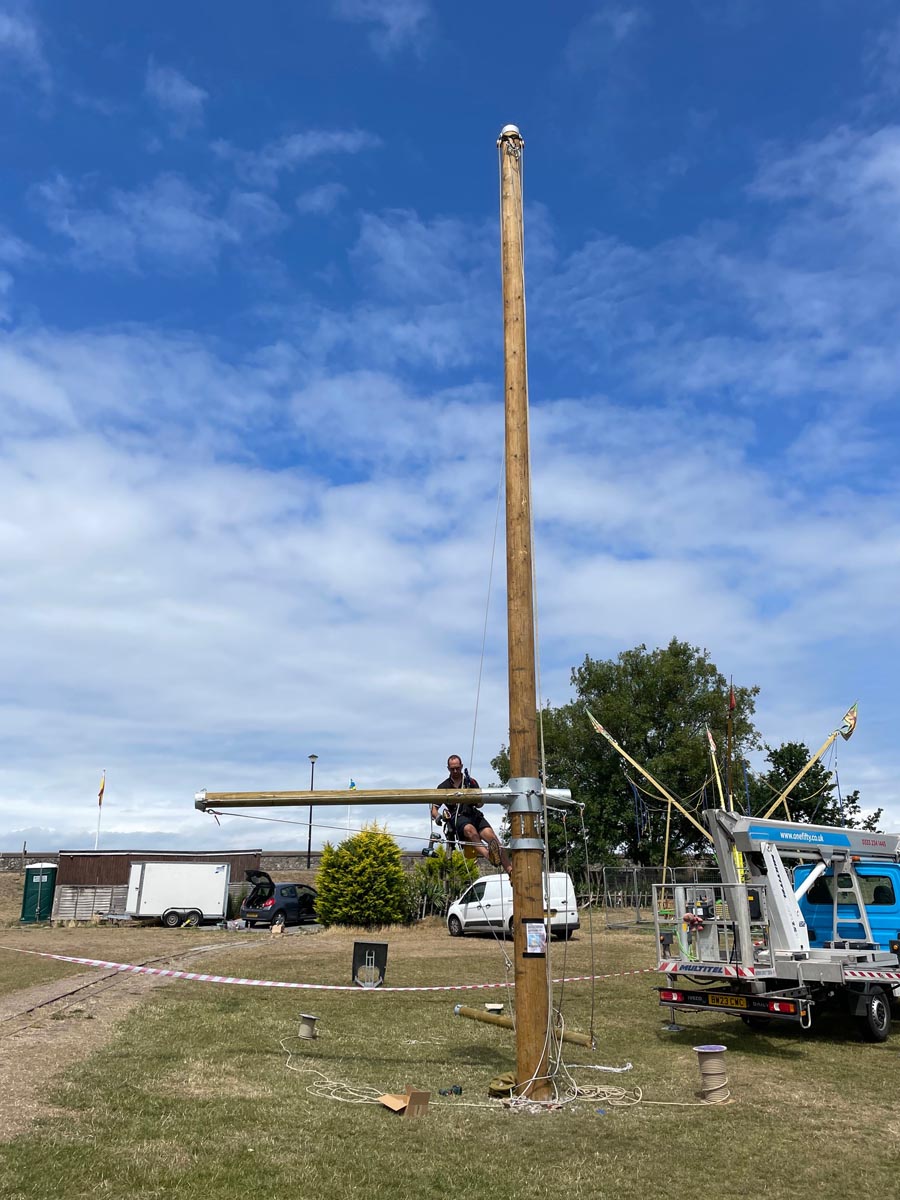
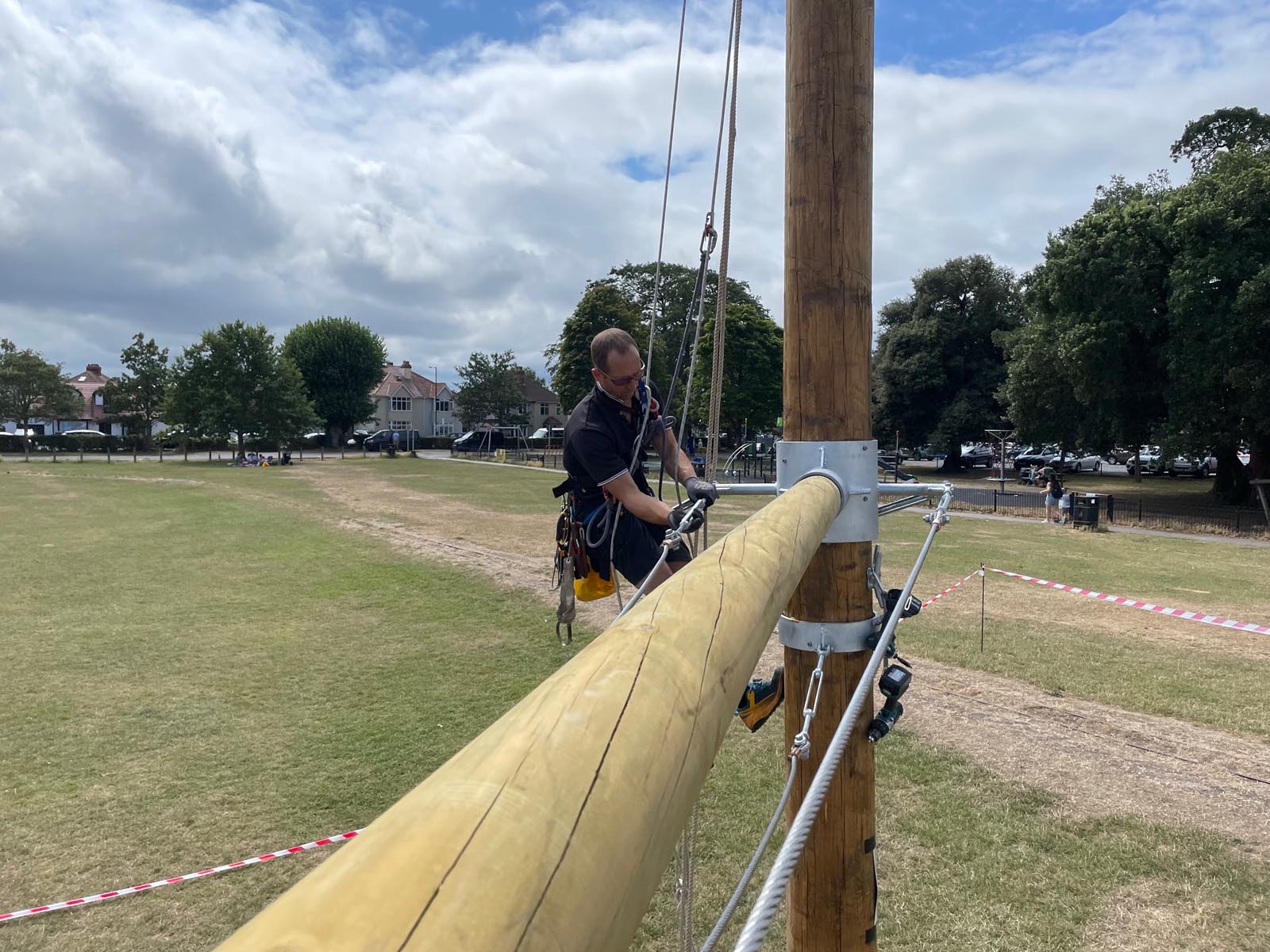
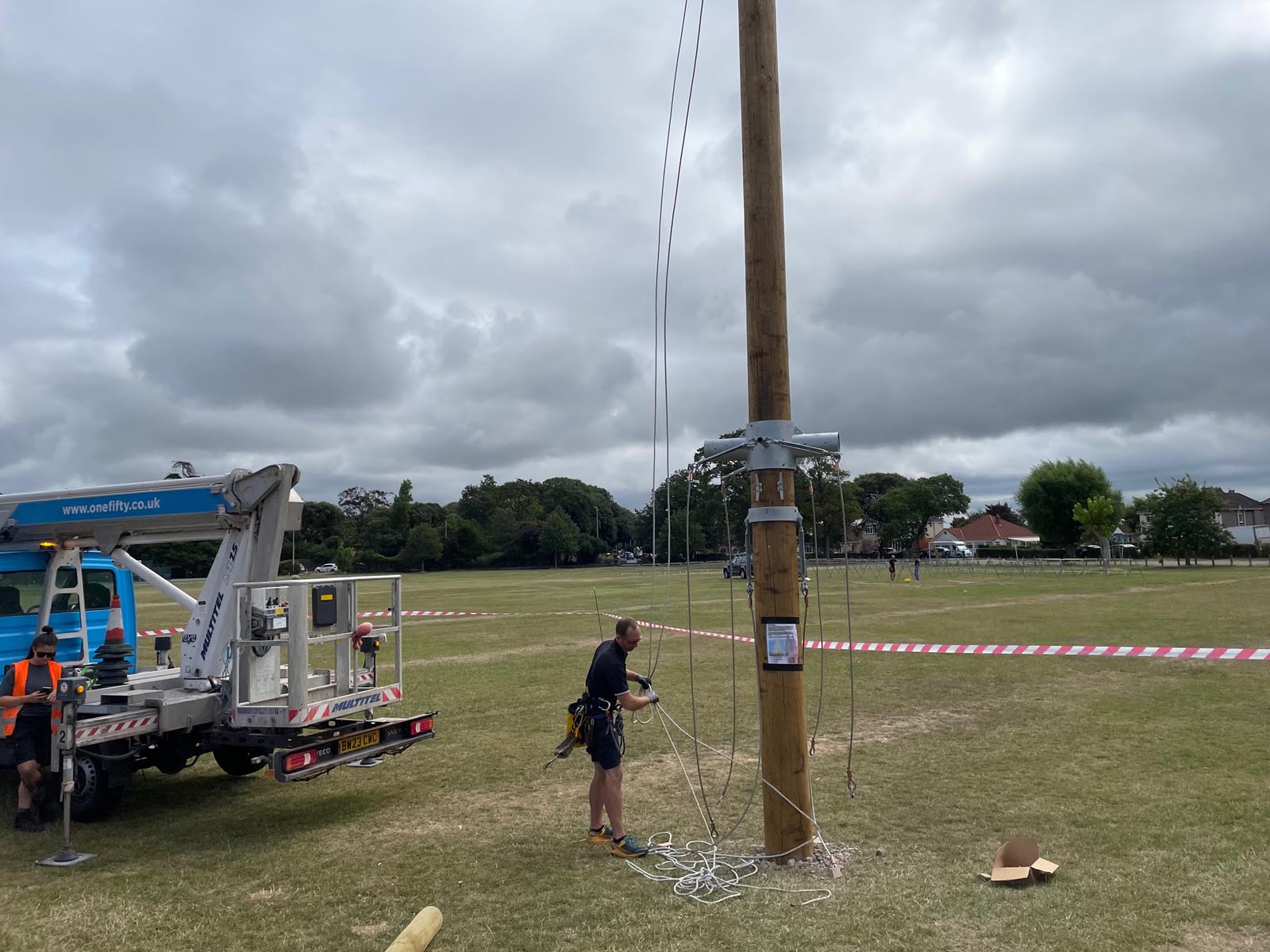
An interesting and instructive day, working with Jay Redman-Stainer, a professional boat rigger. Working from the cherry picker, Jay first attached the halyard blocks to the steelwork at the top of the mast and ran the halyards down. These are the roped that the raise and lower the sails. Also working from the cherry picker, we attached the timber booms to the mast. This involved a lot of chiseling and sanding to get the fit right. I lined up the booms to the boom sockets and with some deft cherry picker work and a lot of trial and error we managed get the timber booms lotted in and screwed in to place with the heavy-duty coach screws.
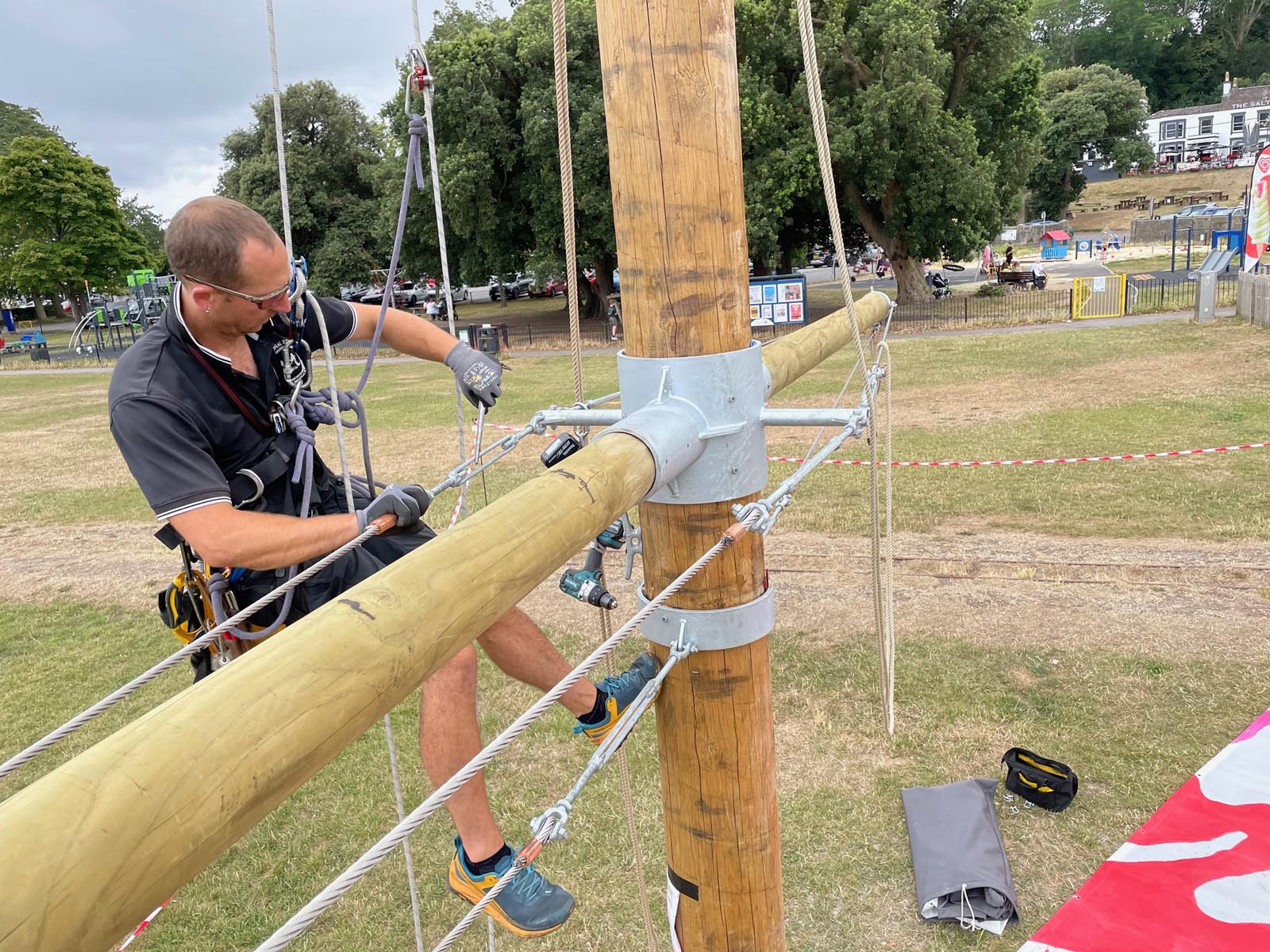
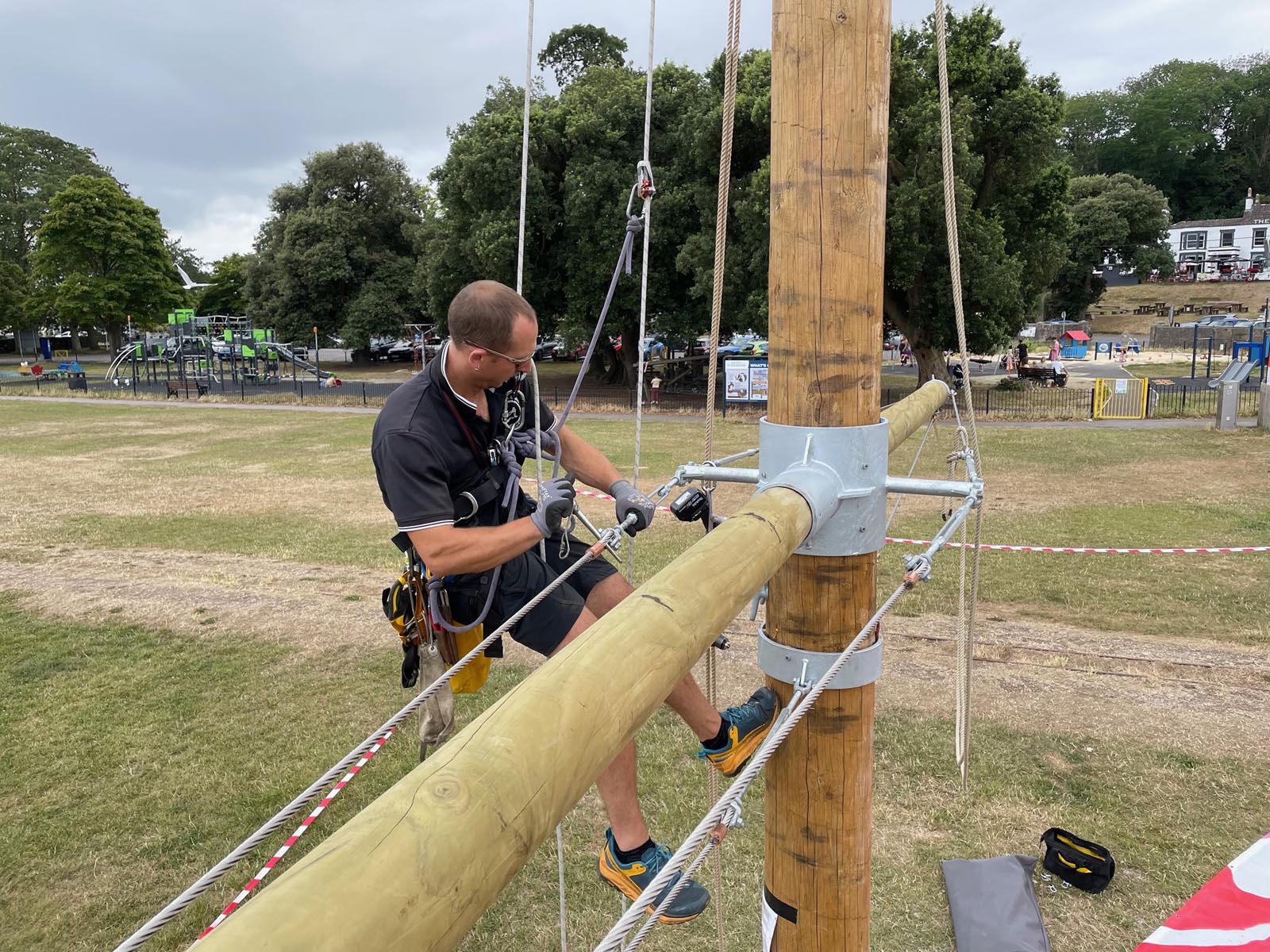
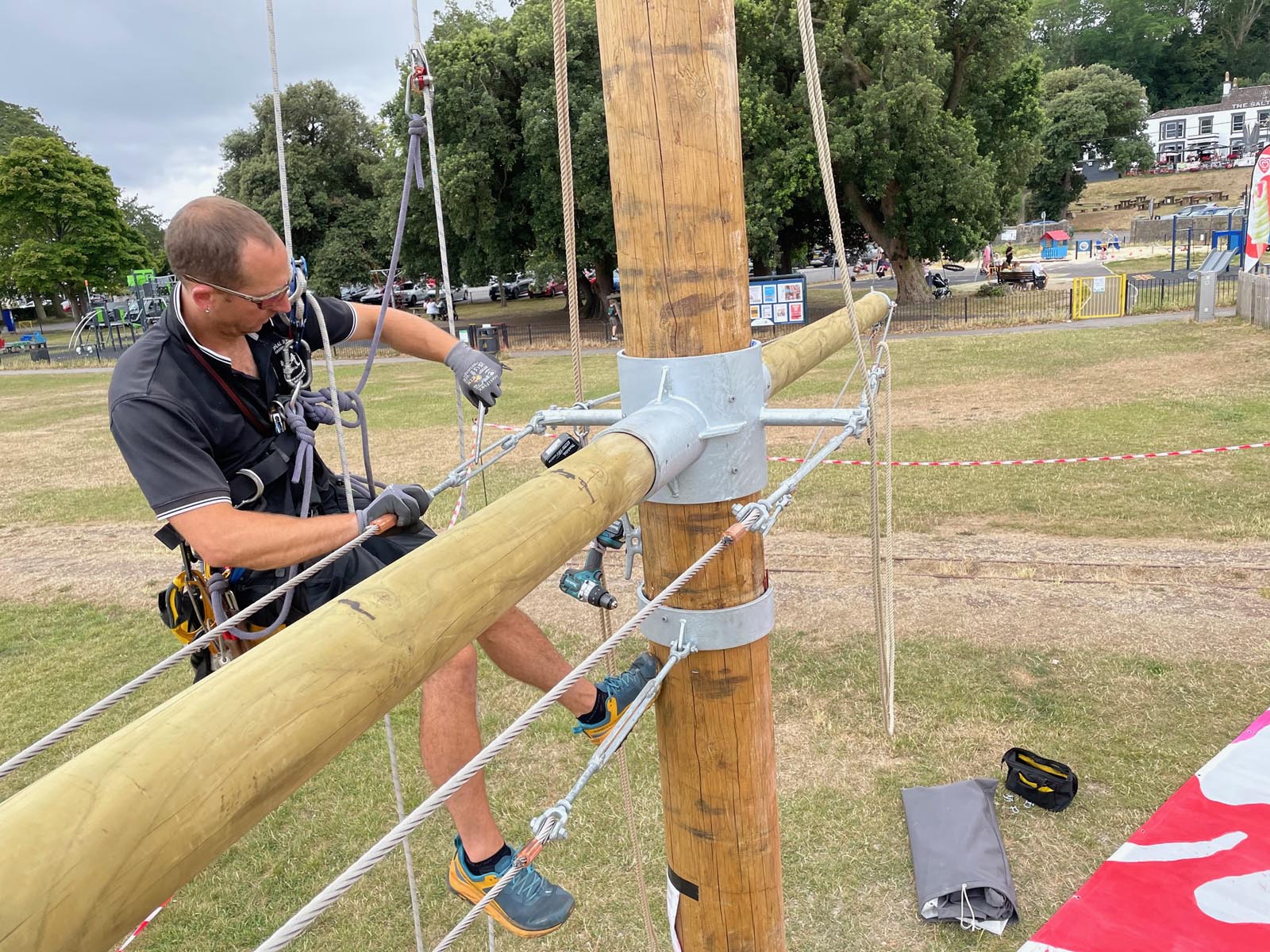
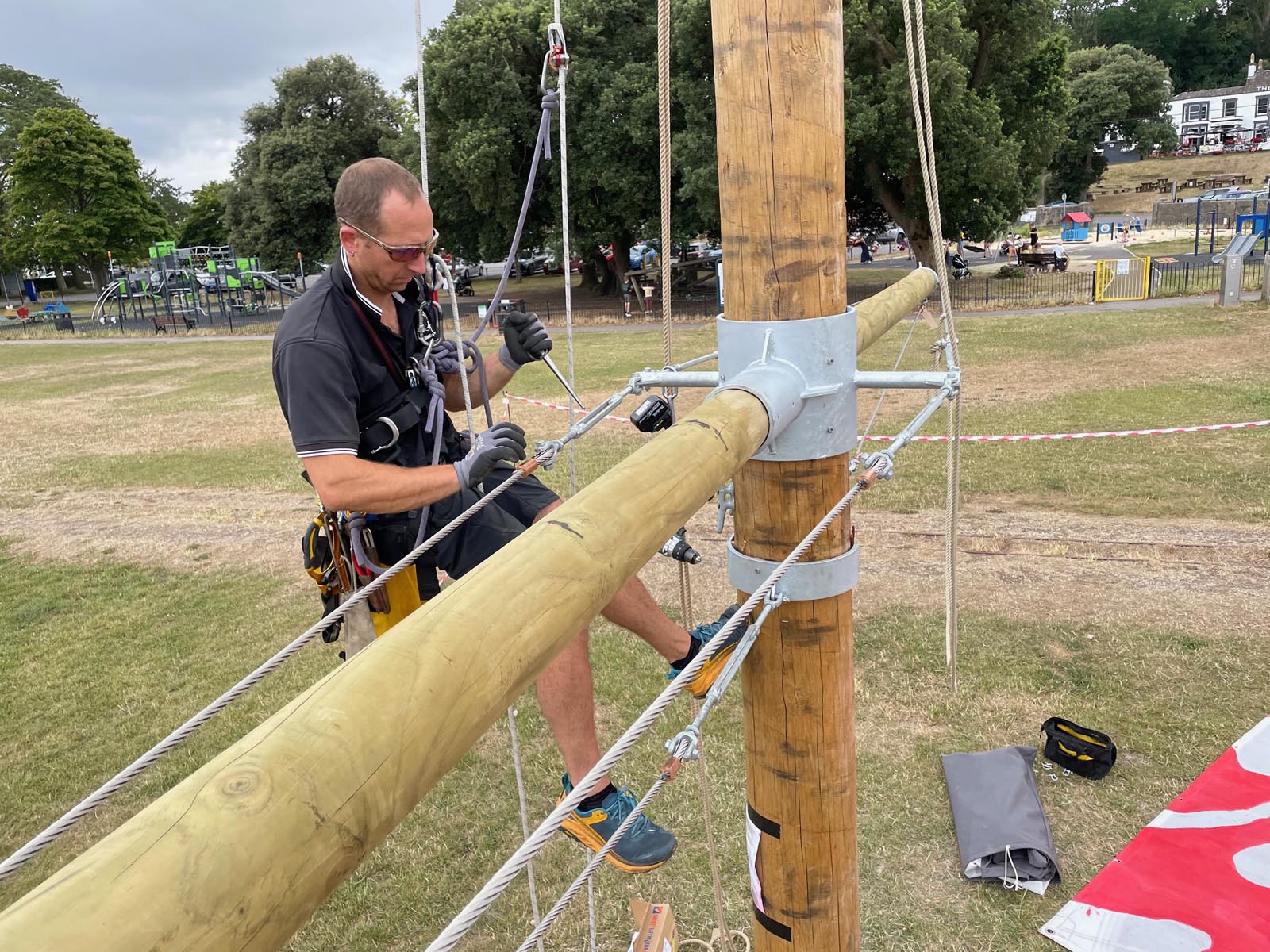
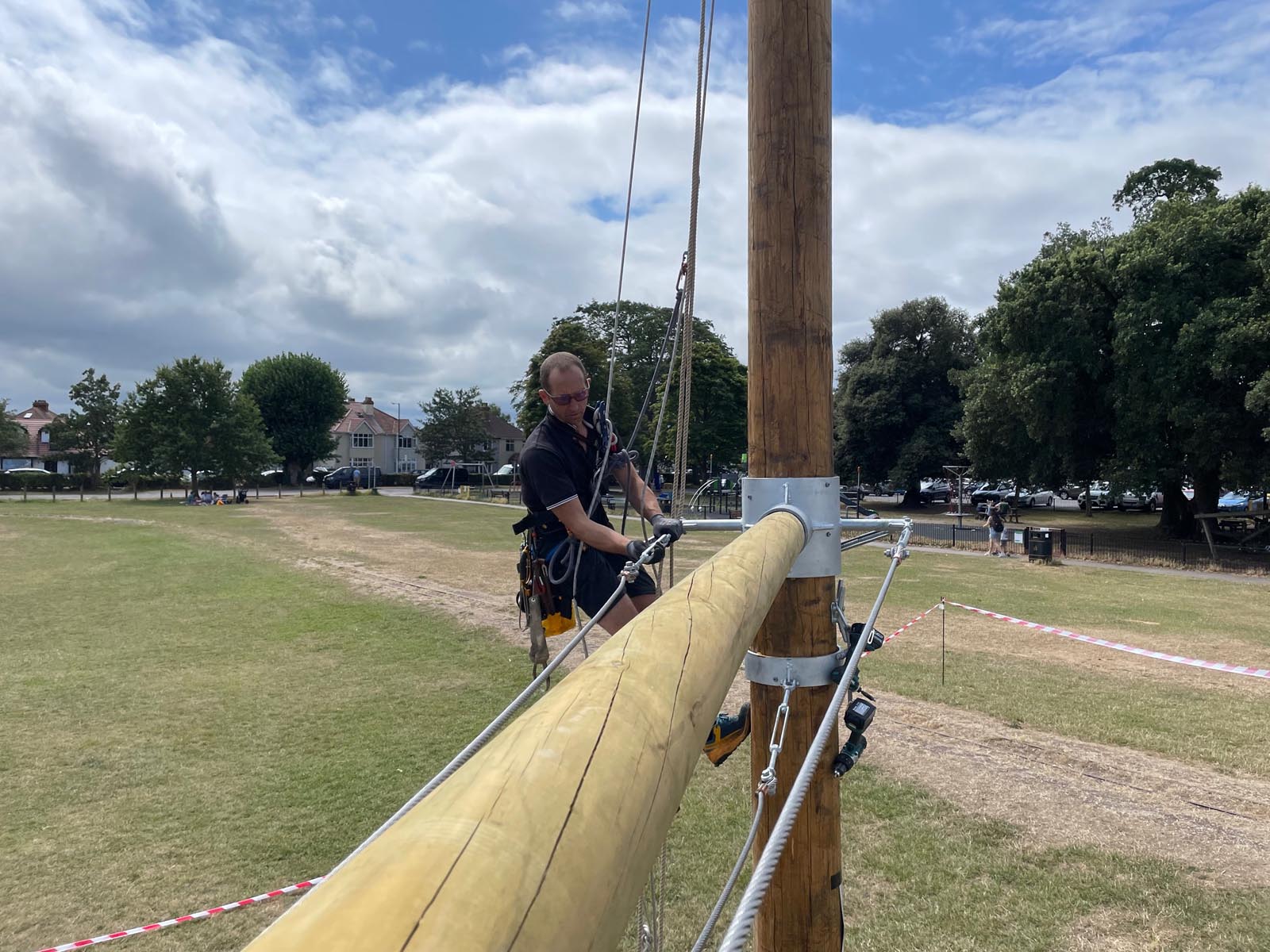
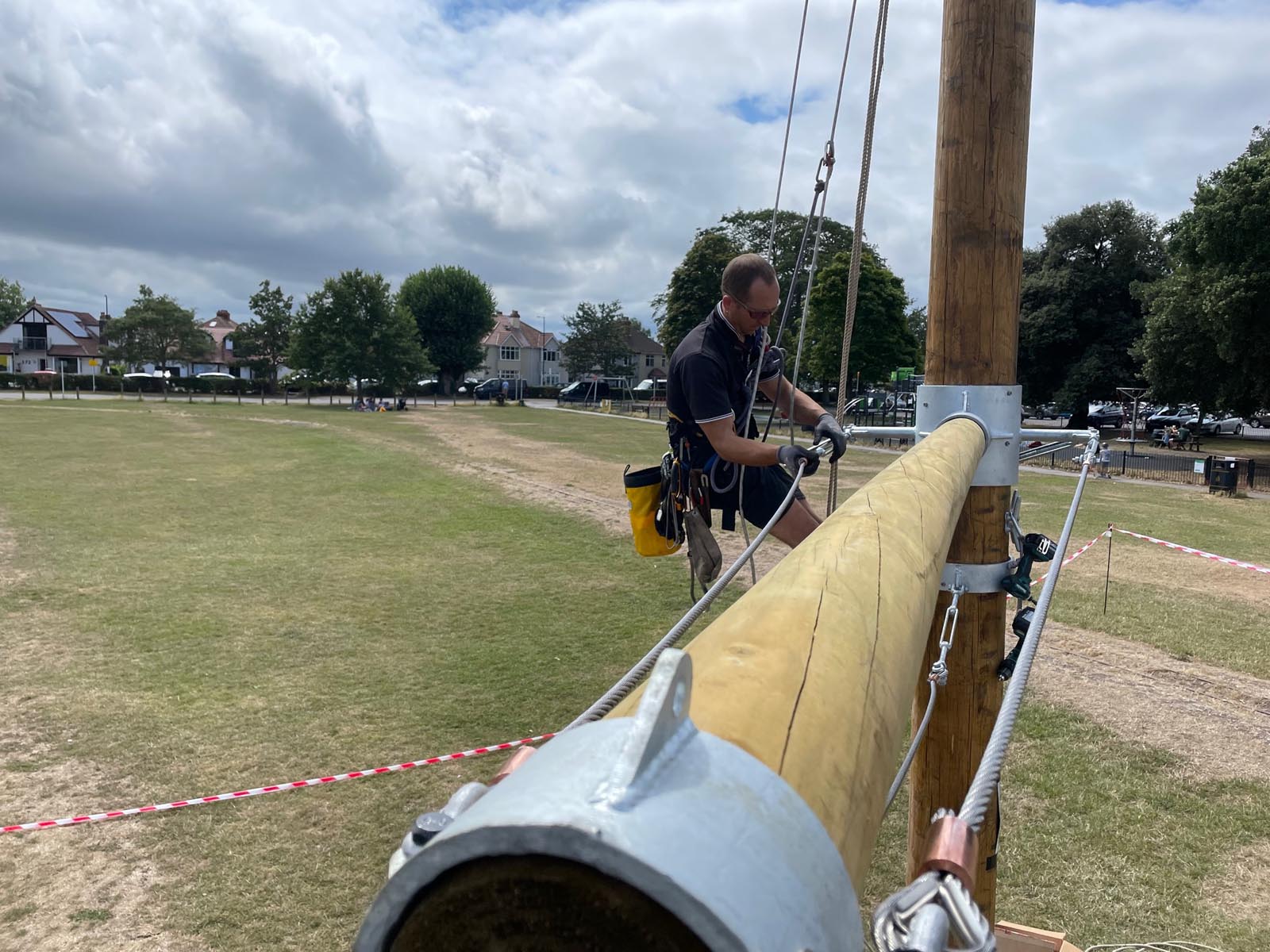
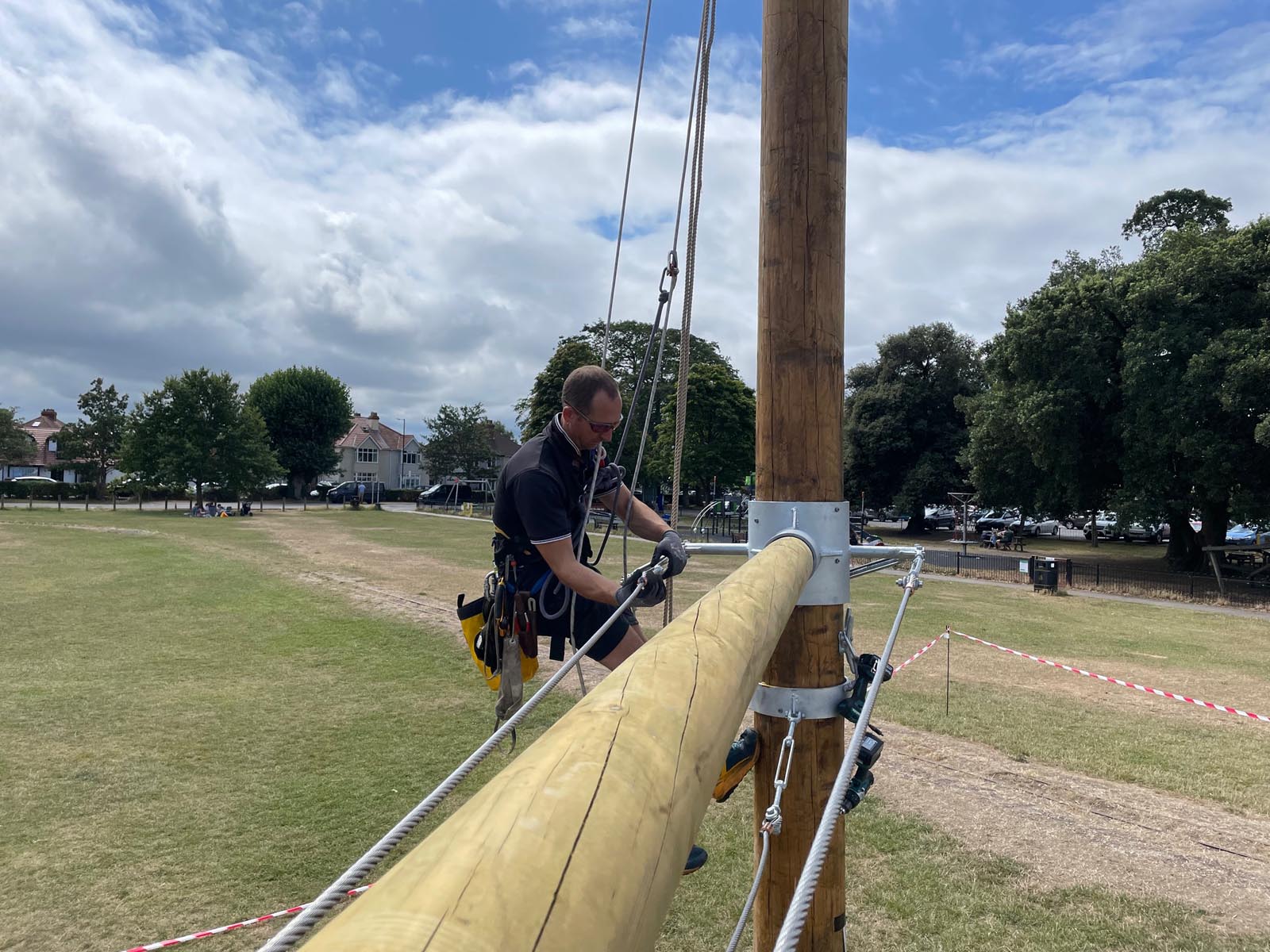
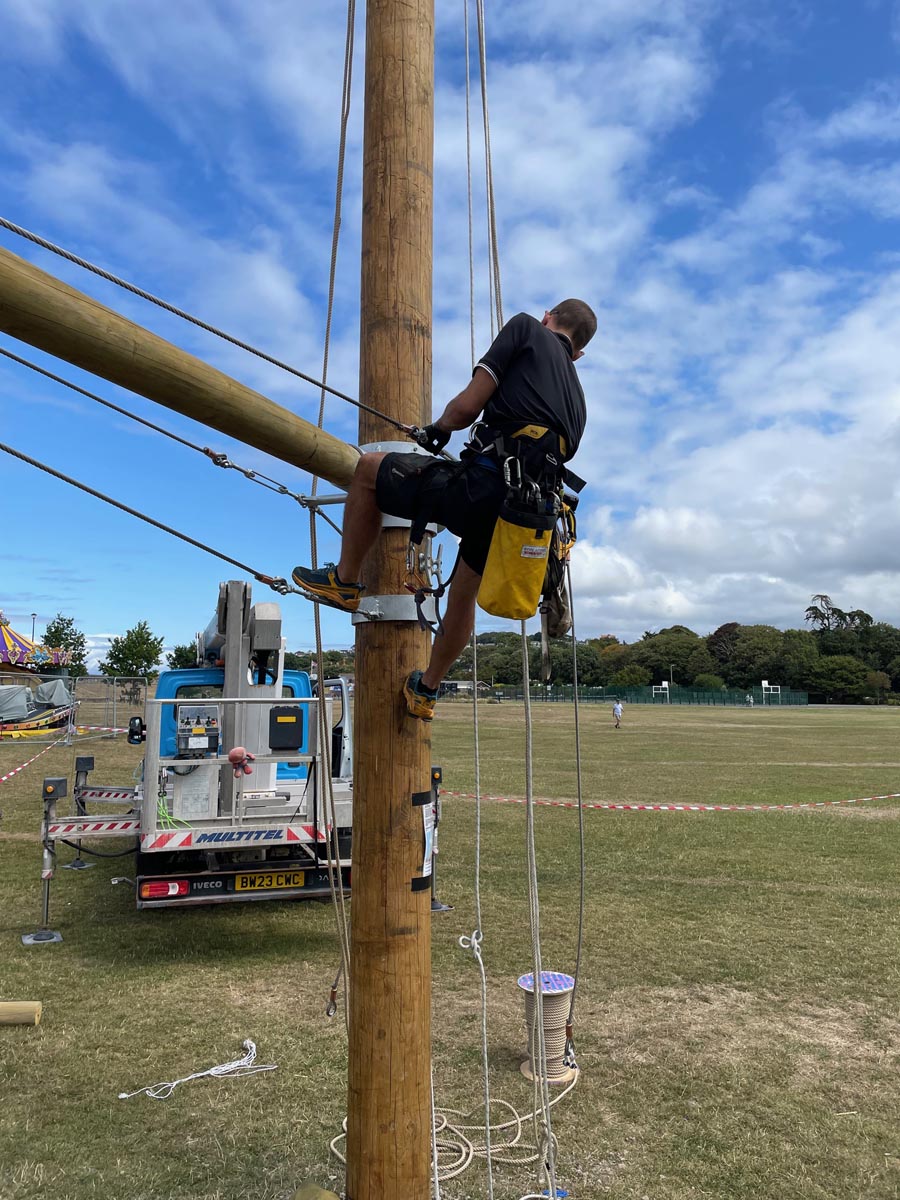
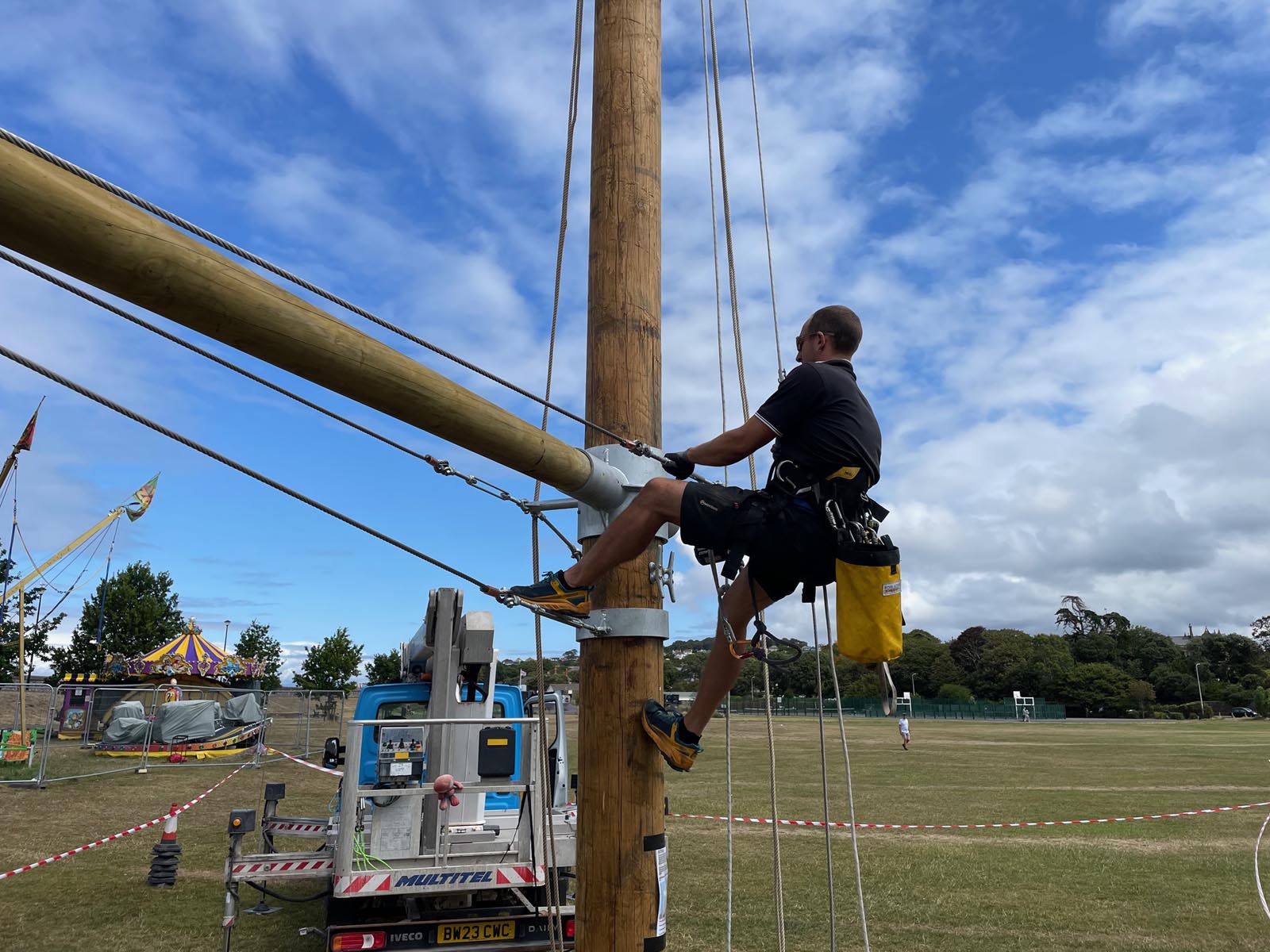
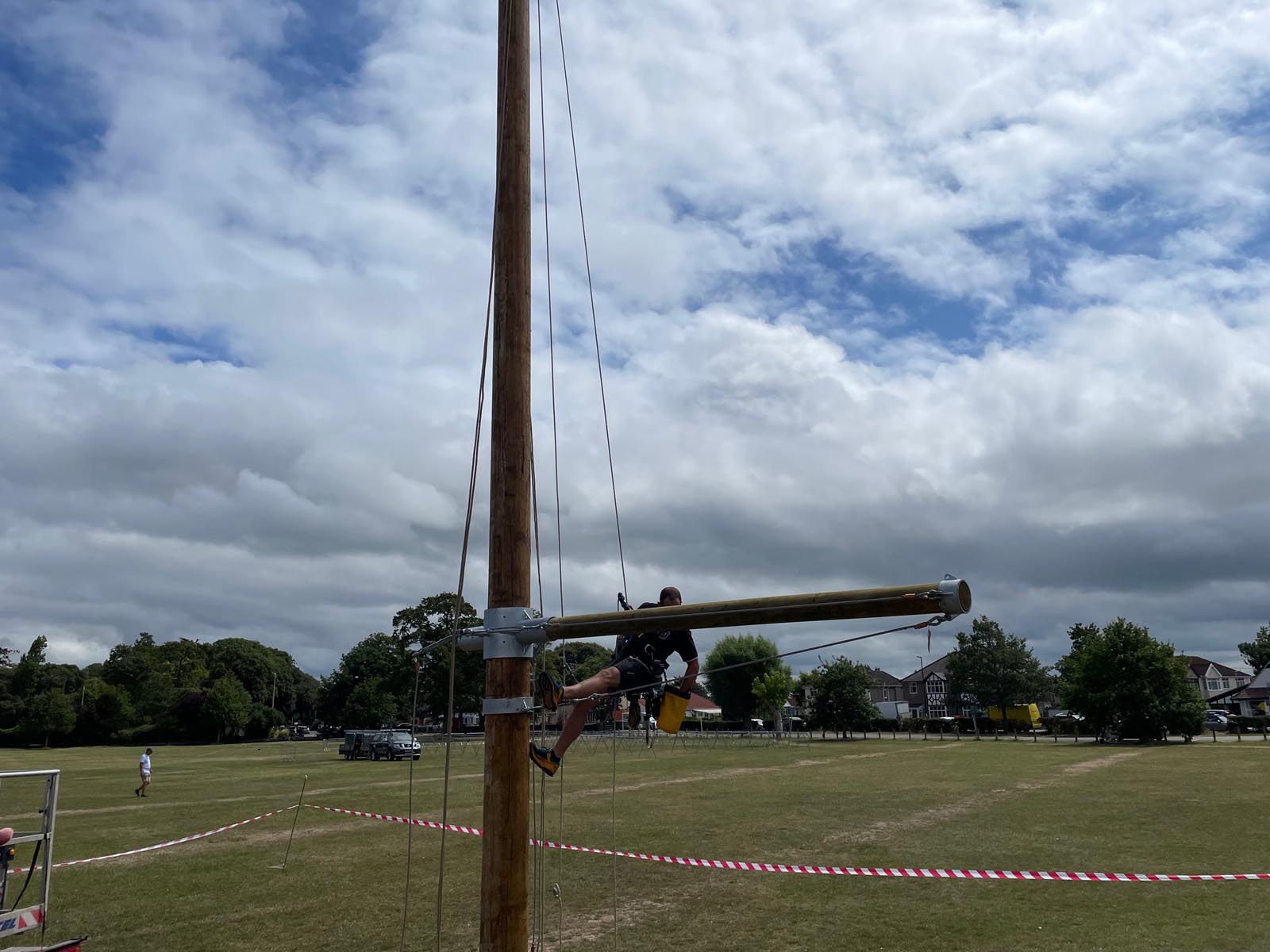
After the installation of the halyards, Jay worked entirely from the mast, harnessed in, climbing the ropes, abseiling and swinging around the structure like a high-ropes circus act.
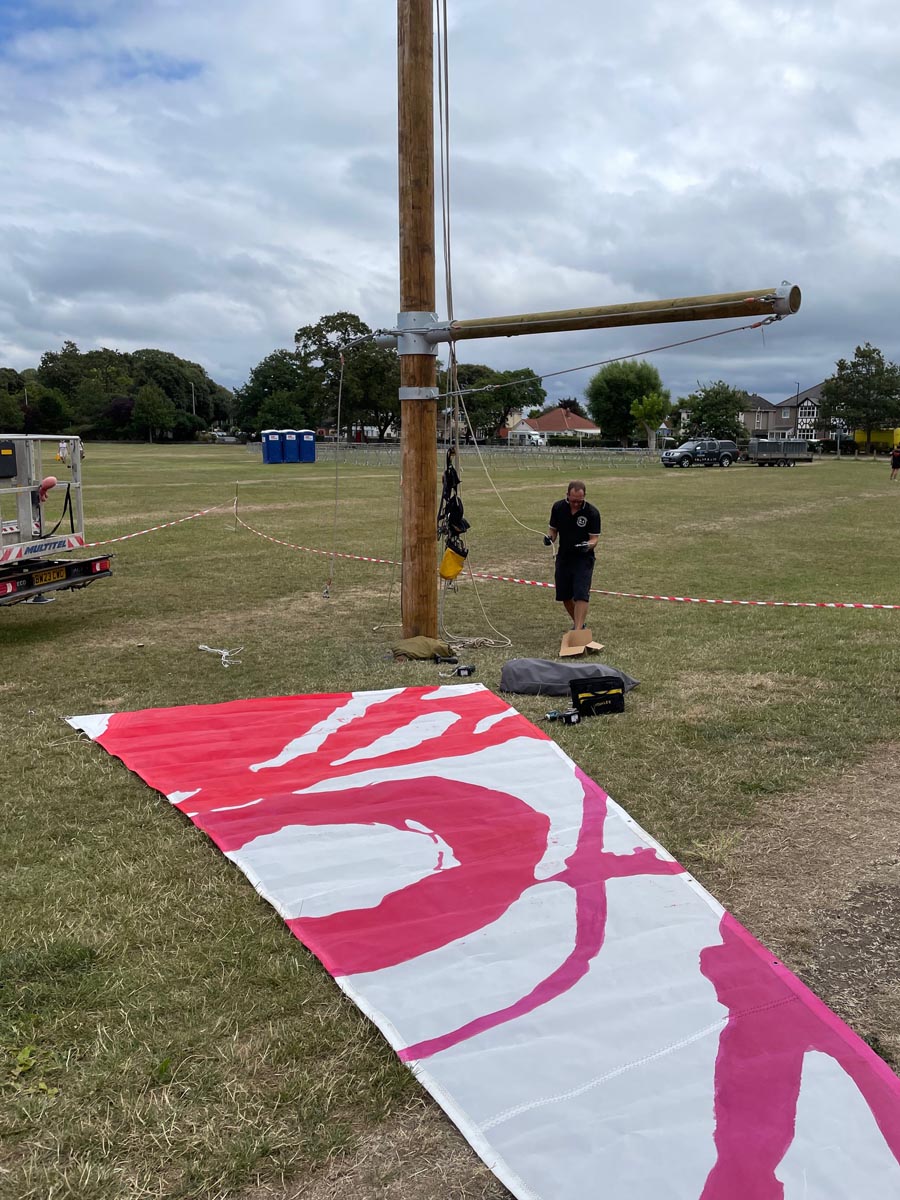
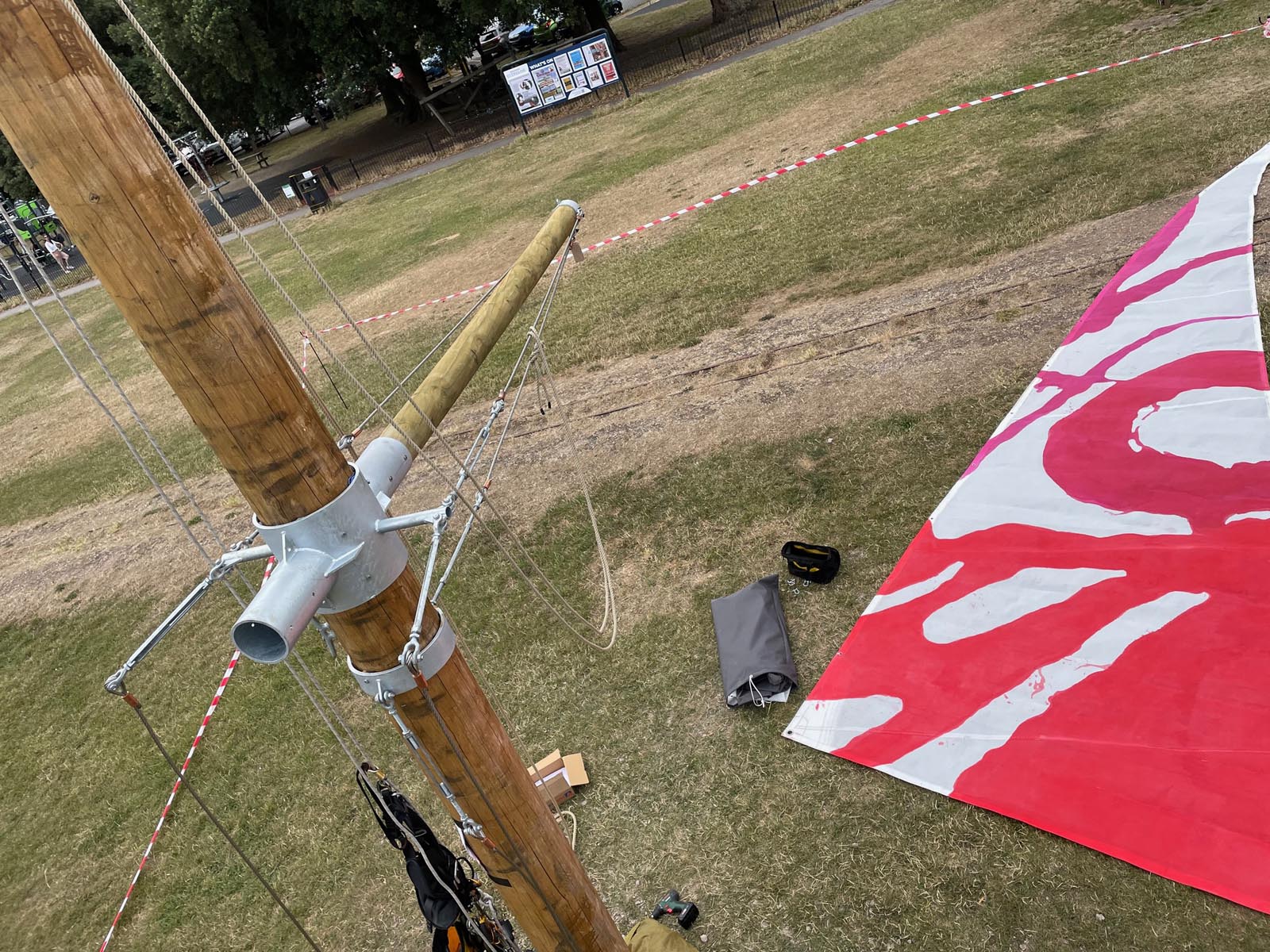
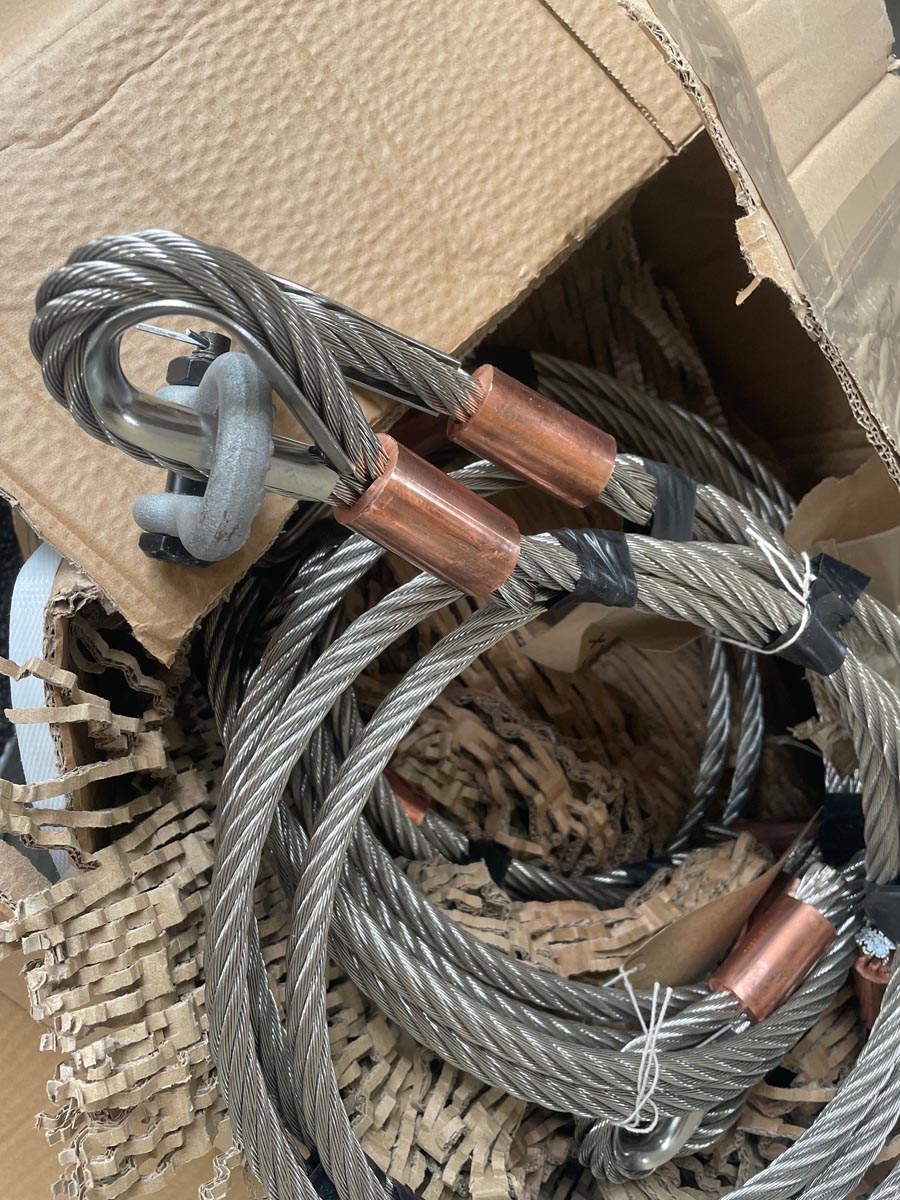
The booms were then further secured to the mast with steel ropes, tensioned with turnbuckles to stabilise the structure and strengthen the timber booms to help them handle the force of the wind loading, transferred from the sails. The bottom corner of the sails were attached to the end of the booms with lashings and ‘weak links’. These weak links are similar to karabiners but they have been manufactured to deliberately break at a certain loading. This meant that if the wind load was too strong and in danger of bringing the structure down the link would break, causing the sails to lose their ability to catch the wind. Instead they would flap about like flags.
Not surprisingly, finally raising the 2 sails up the mast was the most satisfying part of what was a fun and interesting day.